Showing posts with label today in history. Show all posts

Tuesday, 3 December 2013

Historic first: Armenia activist holds rainbow flag during #PUTinOUT protest action in Yerevan

People took to the streets in Armenian capital Yerevan to say to the visiting Russian president: “Putin, you are not welcome in Armenia”, or using Twitter language - #PUTinOUT. They were out in the streets to denounce ruling regime. For more details, see Unzipped - #PUTinOUT - protesters in Armenia say “Putin, you are not welcome”, denounce ruling regime

It was also a historic day for Armenian LGBT rights movement. A well known brave activist Lala Aslikyan brought a rainbow flag, symbol of LGBT rights movement, to the protest march. Big respects, Lala !!

She made history today by holding rainbow flag during a protest action in Armenia. For the first time ever.


*source: @nkayserian
*source: CivilNet.am

After the march she was followed by police and detained along with other fellow activists, although there is no indication that they were detained because of holding rainbow flag, but rather as part of a massive crackdown on all anti-regime, anti-Putin activists. They were later released.


But apart from being forcibly taken away and detained by police, holding rainbow flag didn’t pass without an incident.

Lala and friends were attacked and harassed by members of ultra-nationalist, neo-nazi like Hayazn group that recently transformed into a party. This was the same group that attacked Diversity march last year, as well as screening of gay-themed Parada film in Yerevan. They were part of diverse groups and individuals (ranging from ultra-nationalist, far right to very liberal) taking part in a protest action against Russian president visit and against Armenia ruling regime decision to join Russia led customs union. [see below videos of the attack]


Lala (and friend) bravely defended her right, as a free citizen, to march with the flag she prefers, saying that no one can interfere with her decision and she will hold the flag regardless of any hostility.

Activists were successful in defending the flag. It remained with them without being torn down or taken away.

Remember this date: 2 December 2013. This was the first time ever in Armenian history that a rainbow flag was held at a protest action. Interestingly, that particular flag has a history of its own. It was used in Genocide memorial day protests in front of the Turkish Embassy in Paris for several years in 2000s.

Of course, the appearance of rainbow flag will be exploited by pro-Russian forces who are full of scare mongering tactics, equalling EU with being gay. But hey, they have been doing that for months now, regardless of rainbow flag appearance. Indeed, it is very relevant to have rainbow flag during any protest action against Putin, taking into account his anti-gay policies in Russia and their influence on surrounding post-Soviet countries.

"За вашу и нашу свободу”.
***
And report by epress.am (AM)


Ծիածանի դրոշը Պուտինի դեմ երթի մասնակիցների միջև վեճի առարկա է դարձել Այսօր, ժամը 15։45-ի սահմաններում Հյուսիսային պողոտայից բերման են ենթարկել ակտիվիստներ Լալա Ասլիկյանին, Սևակ Կիրակոսյանին, Արևիկ Մարտիրոսյանին: Դրանից մի ժամ առաջ Ասլիկյանից խլել էին տեսախցիկը, իսկ բերման ենթարկելուց մի քանի րոպե առաջ ոստիկանները մոտեցել են Ասլիկյանին և ասել, որ տեսախցիկը կարող է «գնալ վերցնել ոստիկաններից»՝ Հանրապետության հրապարակից: Ակտիվիստը պատասխանել է, որ իր տեսախցիկը ոտքեր չունի և պահանջել է, որպեսզի ոստիկանները բերեն այն: Մի քանի րոպե անց մոտ 20 ոստիկաններ մոտեցել են նստարանին նստած ակտիվիստներին և, բռնի ուժ գործադրելով, տարել են բաժին՝ առանց բացատրություն տալու: Այդ պահին ակտիվիստների ձեռքին էր Ուկրաինայի դրոշը և ծիածանի դրոշը, որը միջազգայինորեն հայտնի է որպես ԼԳԲՏ համայնքի դրոշ: Նույն ծիածանի դրոշի պատճառով այսօր անցկացված երթի ժամանակ Ասլիկյանի վրա հարձակում են գործել բողոքի ակցիայի մասնակից՝ «Հայազն» կուսակցության ներկայացուցիչները: «Հայազն»-ի երիտասարդները փորձել են Ասլիկյանի ձեռքից խլել դրոշը, պահանջել են հեռացնել այն։ Երթի այլ մասնակիցները միջամտել են վեճին ու հանդարտեցրել «Հայազն»-ի երիտասարդներին։ Նշենք, որ այս պահին Լալա Ասլիկյանը և մյուս բերման են ակտիվիստները գտնվում են ոստիկանության Կենտրոնի բաժնում։

Wednesday, 17 July 2013

England follows France in celebrating equality and making gay marriage a reality. Congratulations!!

Here we are. Gay marriage became law in England and Wales. Scotland to follow soon with a separate legislation.

Congrats to British citizens and activists who made equal marriage a reality.

British PM David Cameron personally contributed to the cause by proposing the legislation in the first place. I do not support Tories, but here is what PM tweeted today:

@David_Cameron: After a long parliamentary process gay marriage became law tonight - something I believe we can be proud of as a country. 

Respects!!

The other day, a symbol of Paris - Eiffel tower turned rainbow for the occasion of French National Day - Bastille day. Liberté, égalité, fraternité ["Liberty, equality, fraternity (brotherhood)].

Ironically, some local Armenian and Russian homophobes decided to show solidarity with French homophobes (against passing of gay marriage law in France) on... Bastille Day. They have no idea what this day is all about. This is how out of touch with contemporary (and historic) realities these people are. This is how irrelevant they became.


Back to the main topic of this blog post.

Now that gay marriage became a reality in Britain, I should reclaim my traditional Armenian roots and start looking for husband ;))

And talking about traditions.

“Belgium used to belong to the countries in Europe with a very conservative attitude towards gays until the mid-1990s and then became one of the most progressive countries regarding gay rights within only 10 years.” [source]

FYI Armenia.

P.S. I devote this post to very dear friends of mine who got married recently. They know who they are. x

Wednesday, 26 June 2013

Victory of Love in the US. Historic rulings "mark the biggest advance in civil liberties for gay people in a generation"

I am so happy and full of emotions. This is truly a historic day, and not only for the US. This is a victory of human rights. This is a victory of love.

Country by country. Regime by regime. Sooner or later. This is going to happen. Get over it.

And... congrats, gay Armenians in California!! You can now officially marry your loved ones.
***

The Guardian: "A landmark supreme court ruling struck down a controversial federal law that discriminated against gay couples in the US, delivering a stunning victory on Wednesday to campaigners who fought for years to overturn it.

The court also dismissed a separate appeal against same-sex marriage laws in California, restoring the right to gay marriage in the largest US state and nearly doubling the number of Americans living in states where gay marriage would be legal.

Together, the two rulings mark the biggest advance in civil liberties for gay people in a generation, and come amid growing political and international recognition that same-sex couples deserve equal legal treatment."

As Ben Affleck tweeted: "Goodbye #DOMA #Prop8. Hello #equality."

And the hero of the day is of course Edith Windsor.

BBC: "The legal challenge to Doma was brought by New York resident Edith Windsor, 83. She was handed a tax bill of $363,000 (£236,000) when she inherited the estate of her spouse Thea Speyer - a levy she would not have had to pay if she had been married to a man."

President Obama called Edie Windsor—the plaintiff in the #DOMA case—from AF1 to congratulate her on today's ruling (White House twitter)

*picture - via The New Yorker: How Edith Windsor learned she won

The New Yorker: Everyone at the apartment of Roberta Kaplan, the lawyer who argued Edith Windsor’s successful challenge to the Defense of Marriage Act, exploded in screams and sobs when the ruling came down. Kaplan called her mother and said, “Total victory, Mom: it couldn’t be better.” Windsor said, “I wanna go to Stonewall right now!” Then she called a friend and said, “Please get married right away!” 

Update: Just after 11 A.M., the President called. Kaplan picked up the phone and gave it to Windsor. “Hello, who am I talking to?” Windsor said. “Oh, Barack Obama? I wanted to thank you. I think your coming out for us made such a difference throughout the country.”
***

Here is how Google celebrated today's historic ruling. Any search involving "gay", "lesbian", "bisexual", "transgender", "LGBT" - turned Google search rainbow.


Monday, 21 January 2013

Today in history: Barack Obama highlights gay rights in an inaugural address

Obama made history today as the first President of the United States to highlight gay rights in an inaugural address:

"Our journey is not complete until our gay brothers and sisters are treated like anyone else under the law – for if we are truly created equal, then surely the love we commit to one another must be equal as well."

Barack Obama, 21 January 2013 (*source)


Respects, Mr. President !!

Saturday, 25 June 2011

History in the making: New York legalises gay marriage

It's a place that gave birth to the modern gay rights movement. Stonewall. It's therefore a bit surprising it took so long for marriage equality to become a reality in New York. It seemed so natural and routine for the soul of New York that this should have been the case for ages. Still, with delays, it's truly a history in the making. It's impossible to underestimate the importance and influence of New York worldwide. It's not simply a victory for local activists. It's a victory for all of us, for anyone who cares about human rights. Well done, New York !! Mon amour.

Yes, was so f*cking amazing to wake up with the news that New York finally legalised gay marriage.

This picture of the Empire State building in New York covered in rainbow went viral today.


It has always been cool to be a New Yorker. It's now even double-triple cool...

Cheers!

Monday, 13 June 2011

Historic memorandum between Armenia human rights Ombudsman and PINK Armenia on protection of LGBT rights

Remember this date: 4 June 2011. On that very date, during Civil Society Forum in Tsaghkadzor, for the first time ever, Armenia human rights Ombudsman and PINK Armenia signed historic memorandum on collaboration in protection of LGBT rights. Another important milestone has been passed which could lead to the development of practical mechanisms and legal basis for human rights protection of LGBT people in Armenia. What is also extremely important, perhaps for the first time, acceptable Armenian terms to refer to gay/lesbian, bisexual and transgender people were used in the official document [նույնասեռական, երկսեռական, գենդերափոխ].

PINK Armenia (@pinkarmenia)
SIGNED!!! memorandum between PINK and Ombudsman to protect the rights of #LGBT people, historical moments of Armenia! #CSforum #HRArmenia

PINK Armenia (@pinkarmenia)
June 4, the first ever Armenian document with Armenian terms to protect the rights of #LGBT people in Armenia #CSforum #HRArmenia
I would like to congratulate PINK Armenia, LGBT activists in Armenia and Diaspora and beyond, and Ombudsman's office for making a history, with the hope that what has been written in the memorandum would be implemented in practice.

Below is a selected extract from the original memorandum (AM). I have read the full text of the memorandum and have to say it provides a good basis for pretty comprehensive collaboration between sides, including individual cases and potentially developing a legal basis for furthering LGBT rights and equality in Armenia.

Memorandum is signed for 6 years: 4 June 2011 till 1 February 2017.
***

Այս Փոխըմբռման հուշագիրը (ՓՀ) կնքվում է ՀՀ մարդու իրավունքների պաշտպանի /այսուհետ` Պաշտպան/ և «Հանրային տեղեկատվություն և գիտելիքի կարիք» հասարակական կազմակերպության /այսուհետ` Հասարակական կազմակերպություն/ միջև /այսուհետ` Կողմեր/:

Նկատի ունենալով ՀՀ մարդու իրավունքների պաշտպանի` Հայաստանի Հանրապետության Սահմանադրությամբ, «Մարդու իրավունքների պաշտպանի մասին» ՀՀ օրենքով, այլ իրավական ակտերով վերապահված` Հայաստանի Հանրապետության միջազգային պայմանագրերով, միջազգային իրավունքի սկզբունքներով ու նորմերով նախատեսված` մարդու (այդ թվում` նաև քաղաքացու) իրավունքների և հիմնարար ազատությունների պաշտպանության ոլորտում իրավասություններն ու առաքելությունը:

Հաշվի առնելով այն, որ Պաշտպանին կարող է դիմել ցանկացած ֆիզիկական անձ` անկախ ազգությունից, քաղաքացիությունից, բնակության վայրից, սեռից, ռասայից, տարիքից, քաղաքական և այլ հայացքներից ու գործունակությունից: Պաշտպանին կարող են դիմել նաև իրավաբանական անձինք:

Ելնելով այն հանգամանքից, որ նույնասեռական, երկսեռական, գենդերափոխ անձանց իրավունքների պաշտպանության ոլորտի Հասարակական կազմակերպությունները նույնասեռական, երկսեռական, գենդերափոխ անձանց իրավունքները պաշտպանելու, հանրօգուտ այլ գործունեություն իրականացնելու նպատակներով ստեղծված հասարակական միավորման տեսակ է, որոնք գործում են օրինականության, հրապարակայնության սկզբունքների հիման վրա:

Նկատի առնելով այն, որ Կողմերը կիսում են նմանատիպ առաքելություններ և ցանկանում են համագործակցել փոխադարձ հետաքրքրություն ներկայացնող` նույնասեռական, երկսեռական, գենդերափոխ անձանց իրավունքների պաշտպանության ոլորտում, որպեսզի բարձրացնեն նշված անձանց իրավունքների պաշտպանության ոլորտի զարգացմանն ուղղված իրենց ջանքերի արդյունավետությունը,

Այսուհետ` Կողմերը համաձայնում են համագործակցել հետևյալի վերաբերյալ.

Հոդված 1
Նպատակը

Այս ՓՀ-ի նպատակն է ապահովել համագործակցության շրջանակ և օժանդակել Կողմերի միջև գործակցությանը ընդհանուր հետաքրքրություն ներկայացնող ոլորտում, այն է նույնասեռական, երկսեռական, գենդերափոխ անձանց իրավունքների պաշտպանություն:

[...]

Monday, 17 May 2010

PINK & friends make history in Armenia by marking IDAHO and turning Yerevan sky rainbow

May is truly a historic month for Armenians. Starting this year, it will become even double-triple historic for LGBT Armenians, their friends...

On 4 May, there was a groundbreaking presentation in Yerevan of the landmark report on discrimination towards LGBT people and state with their human rights in Armenia conducted within the framework of “We and Our Rights” project by PINK Armenia.

Today, on 17 May, for the first time ever, the International Day Against Homophobia and Transphobia (IDAHO) was celebrated in Armenia. PINK Armenia & friends organised a flashmob with balloons in the heart of Yerevan. "We let the colorful balloons fly in the sky as a symbolic move to combat hate, ignorance and intolerance, to combat homophobia and transphobia," say organisers.

PINK Armenia & friends made history today by turning Yerevan sky rainbow. For me, they are the modern day heroes in Armenia. Their spirit, passion, determination make me hopeful that after all there is bright future for Armenia. They are the PERSONS.AM (in capital letters). I hope their spirit won't be broken... EVER!!!
***


*video and pictures - by PINK Armenia

Tuesday, 3 February 2009

Johanna Sigurdardottir: modern world’s first openly gay prime minister appointed in Iceland


1 February 2009

BBC reports that “Iceland has announced a new government that will be headed by the modern world's first openly gay leader.”

“The 66-year-old's appointment as interim leader - until elections in May - is seen by many as a milestone for the gay and lesbian movement, correspondents say.”

Here is the most important point I’d like to pay your attention to.

According to Ingo Sigfusson of Iceland's public broadcaster, RUV, Ms Sigurdardottir's emergence as the world's first openly gay leader has barely rated a mention among his countrymen and women.

"It's by no means a big deal. It's been reported, but it's not something the public is focusing on," he told the BBC.

BBC also reports that “she has even been nicknamed "Saint Johanna" in praise of her work for the rights of the handicapped, elderly and disadvantaged.”

NYT provides comprehensive background info:

"She began her political career as a union organizer with the national airline, now known as Icelandair, where she had worked more than 30 years ago as a flight attendant. She has two sons with her former husband, a banker, and six grandchildren. Ms. Sigurdardottir established a civil partnership in 2002 with Jonina Leosdottir, 54, an author, playwright and journalist. She, too, is a divorced mother.

Although Ms. Sigurdardottir’s rise has drawn widespread attention on Web sites for gay men and lesbians outside Iceland, her relationship is considered unremarkable at home. In 1940, while still a dependency of Denmark, Iceland decriminalized gay sex. It approved civil partnerships for gay and lesbian couples in 1996, one of the first countries to do so.

“Iceland is a small society, and the public knows what Sigurdardottir stands for as a politician, and that’s the only thing that is important,” said Frosti Jonsson, a spokesman for Iceland’s National Association of Queers. “Nowadays, not only does Iceland have one of the most progressive legal environments for gay people, there have also been changes in public attitudes towards gay people. It simply isn’t an issue anymore.”

The Advocate reminds of only one other instance of openly gay politician serving a prime-minister position (not appointed, but “acting prime minister”): Norway finance minister Per-Kristian Foss, who is gay, was that country’s acting prime minister for a brief period in 2002 while both the prime minister and foreign minister were traveling abroad.

*photo - via The Advocate

Wednesday, 21 January 2009

President Obama greets gay and lesbian marchers at Inauguration Parade


''The Lesbian and Gay Band Association. They are a national music organization who has concert and marching bands from cities across America, that makes up a network of Lesbian and Gay bands. Their participation marks the first time that an openly-gay and lesbian group has been invited to march in an Inaugural Parade.''

WTTG Fox5 news anchor Brian Boulter announcing on air the appearance of the LGBA in front of President Barack Obama at the viewing stand near the White House. Unfortunately, the parade started late and crowds had almost completely disappeared for the parade after waiting up to half a day in below-freezing temperatures. The LGBA appearance came 2/3 of the way into the program, and Barack and Michelle Obama can be seen waving warmly to the GLBT participants. The band reportedly had 177 people representing 17 states, and played John Philip Sousa's "The Washington Post March."

*source: Metro Weekly / Last Word

Wednesday, 5 November 2008

Inspirational: "I am American"

They proved that impossible is possible in America. They proved that ‘American dream’ exists. With all its shortcomings, this was a huge democratic exercise.

Over the last decade, and especially last years, US reputation fell down below the lowest possible denominator. It became a bad tone to say "I am American". No longer. At least for now, for me it sounds more like a compliment. Now they may proudly say: "I am American".

I knew that November is going to be a special month for me. It indeed turned out to be very special for personal/professional reasons. It's now very special for the 4th November too, double, triple special. It feels great, inspirational.

Expectations are so high of him that chances to get disappointed are very high too. Beginning of new era, or so I hope.

Saturday, 28 June 2008

38th Anniversary of the First Gay Pride march - New York, 28 June 1978

Thousands of people across Europe participated today in Gay Pride events. In parts of Eastern Europe, the gathering of gays and lesbians to protest discrimination ended in violence and arrests.

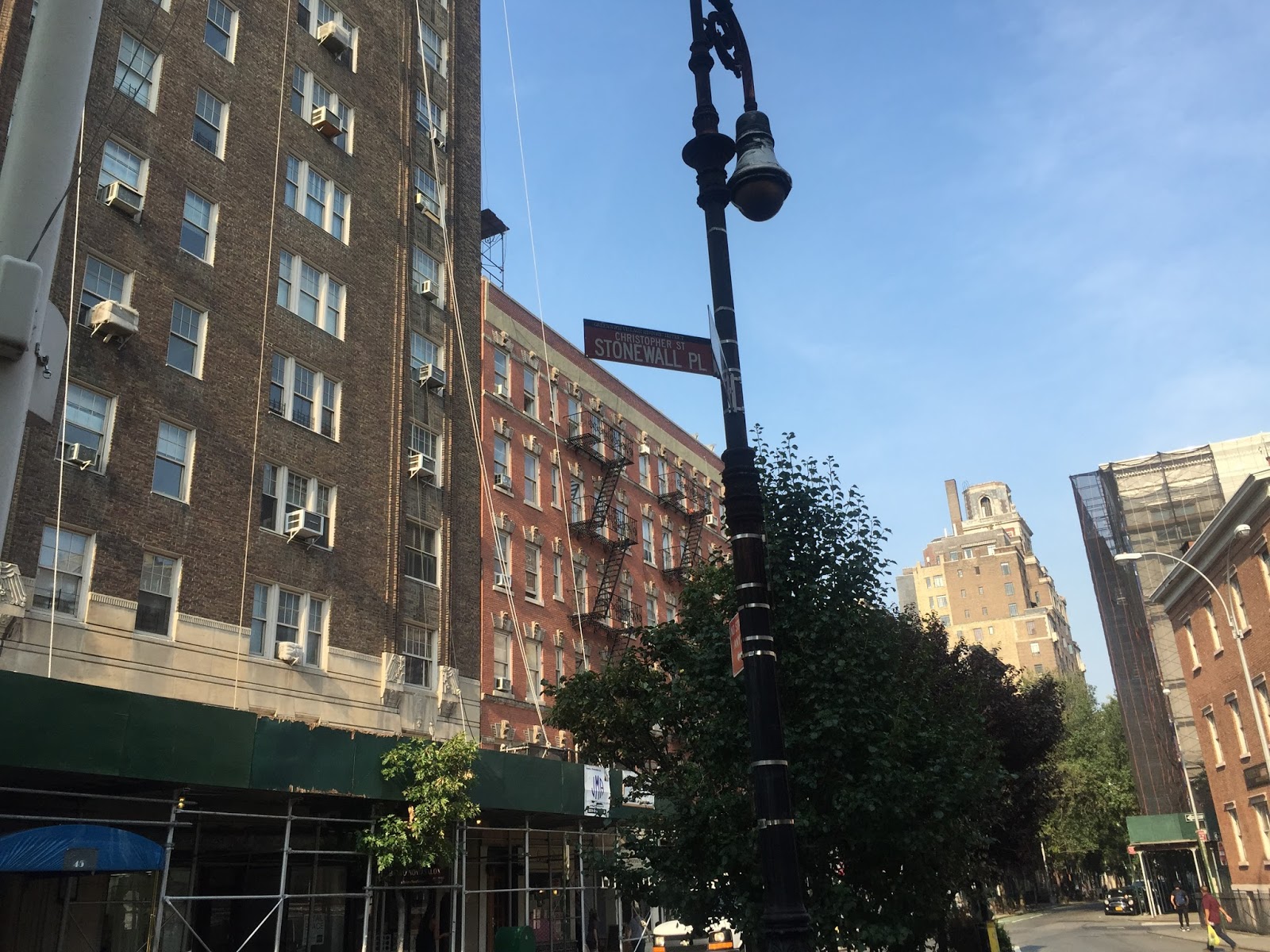
38 years ago today the first LGBT Pride march was held in New York on 28 June 1978 to commemorate the first anniversary of the Stonewall Riots. The Stonewall riots, that began on June 28, 1969, were the beginning of the gay rights movement in the United States with its world-wide influence. There was a police raid at the Stonewall Inn bar in Manhattan. The police raided the bar at the Stonewall Inn for only one reason, it was a gay bar. People started rioting after the horrific event and the start of the gay rights movement was born.

The New York Public Library has posted the following piece (below) on what was originally called Christopher Street Liberation Day to mark this historic anniversary.

***

chrislib19702.jpg

Diana Davies. Gay “Be-In,” Sheep Meadow, Central Park, New York, June 28, 1970.

The first LGBT pride marches were held on June 28, 1970. Originally called Christopher Street Liberation Day, marches were held in 1970 to commemorate the first anniversary of the Stonewall Riots. Craig Rodwell, activist and owner of the Oscar Wilde Memorial Bookstore, obtained support for the march from ERCHO’s (Eastern Regional Conference of Homophile Organizations) November 1969 convention. Rodwell drew in support from New York City activists and organizations, such as Gay Liberation Front and Gay Activists Alliance, to create the Christopher Street Liberation Day Committee to plan the march. A sister march was planned and held in Los Angeles by their Gay Liberation Front. The march went from Washington Place in Greenwich Village uptown on Sixth Avenue to end with a ‘gay-in” in Central Park.

Many of the men and women who marched that day would forever remember that moment on top of the bluff. Before them lay a field of uncut grass, a blizzard of banners, dancing, pot-smoking, singing and music, a huge American flag, “gay pride” signs decorated with the Day-Glo hippie flower stickers, and men and women applauding each new arrival over the hill. And behind them—stretching out as far as they could see—was line after line after line of homosexuals and their supporters, at least fifteen blocks worth, by the count of the New York Times, which found the turnout notable enough to report it on the front page of the next day’s paper. No one had ever seen so many homosexuals in one place before. On top of the bluff, many of these men and women, who had grown up isolated and alone, stood in silence and cried.
From Out for Good: The Struggle to Build a Gay Rights Movement in America by Dudley Clendinen and Adam Nagourney.

More images of the early Christopher Street Liberation Day marches by Kay Tobin Lahusen and Richard Wandell are available in the Library’s Digital Gallery.

Tuesday, 6 May 2008

Today in history: 140 years ago today, on May 6, 1868, the word "homosexuality" was invented

*source: Box Turtle Bulletin (writing by Jim Burroway)

One hundred and forty years ago today, on May 6, 1868, the word homosexuality was invented.

Before then, there were very few value-neutral words to describe people who experienced romantic or sexual attractions toward others of the same sex.

Pejoratives such as “bugger,” “molly,” “sodomite,” or “pederast” were common, words loaded with condemnation and shame. But as the budding science of sexology began to grow, and as same-sex loving defenders began to speak out about what same-sex love was all about, their first problem was with how to name it. “Abominable vice” wouldn’t do. A new word was desperately needed to describe their lives and feelings.

The love that dared not speak its name couldn’t. It didn’t have one.

The first to try to name this love was the German gay-rights advocate Karl Heinrich Ulrichs. In the 1860’s, he described the urning as a “male-bodied person with a female psyche,” who is sexually attracted to men and not women. An Urningin was a “female-bodied person with a male psyche,” and Urningthum came to mean homosexuality itself. Ulrichs devised an entire system of classification based on different combinations of attractions and gender roles. Some of these words gained usage in English, although the less foreign-sounding sexual inversion and inverts to describe homosexuality and homosexuals respectively fell more naturally to English ears. But in a few short years, those words would become obsolete, replaced by the creation of an aspiring Hungarian writer.Karl-Maria Kertbeny

Karl-Maria Kertbeny (or Károly Mária Kertbeny) was an Austrian-born Hungarian journalist, memoirist and human rights campaigner. Kertbeny reportedly became interested in homosexuality when a close friend committed suicide after being blackmailed by an extortionist. Kertbeny later said that this, combined with his “instinctive drive to take issue with every injustice” — as a Hungarian, he knew what it was to be a minority in Vienna — drove him to advocate for civil rights for gay people.

Kertbeny’s own sexuality remains unclear however: He described himself as “normally sexed,” but his diaries reportedly document his appreciation for the male form. When he moved to Berlin in 1868 at the age of 44, he was still unmarried. It was at around this time that Kertbeny coined the word Homosexualität — “of the same sex” — from the Greek prefix homo- (same) and the Latin root sexualis (sex). His first known usage of this word is documented in a letter he wrote to Ulrichs on May 6, 1868.

Karl-Maria Kertbeny’s letter

Karl-Maria Kertbeny’ pamphletHomosexualität made its first known public appearance the following year, when Kertbeny anonymously published the pamphlet Paragraph 143 of the Prussian Penal Code and Its Maintenance as Paragraph 152 of the Draft of a Penal Code for the North German Confederation. This pamphlet advocated for the repeal of Prussia’s sodomy laws, saying that private consensual sex acts shouldn’t be subject to criminal penalties.

Homosexualität gained usage as other German advocates began putting forth the idea that homosexuality was inborn, a “medical problem” which placed homosexuality as a form of pathology or illness. Today of course we recoil at the abuses which arose from this “homosexuality as pathology” mindset, but in the nineteenth century this “medical model” represented a significant improvement in attitudes to homosexuality. Before Ulrichs and Kertbeny, homosexuality was viewed as a mere wickedness or moral degeneracy to be severely punished — often by pillory or death.

But Kertbeny appeared to understand the dangers behind the “medical model.” He not only saw that the “innate” argument was potentially dangerous, but that it was also irrelevant. In that vein, his advocacy for gay civil liberties was remarkably modern:

To prove innateness … is a dangerous double edged weapon. Let this riddle of nature be very interesting from the anthropological point of view. Legislation is not concerned whether this inclination is innate or not, legislation is only interested in the personal and social dangers associated with it … Therefore we would not win anything by proving innateness beyond a shadow of doubt. Instead we should convince our opponents — with precisely the same legal notions used by them — that they do not have anything at all to do with this inclination, be it innate or intentional, since the state does not have the right to intervene in anything that occurs between two consenting persons older than fourteen, which does not affect the public sphere, nor the rights of a third party.”

Kertbeny had another thoroughly modern idea about homosexuality, and this one is probably the most salient for understanding homosexualität’s triumph over urning and invert. The word homosexual doesn’t refer to any assumptions about gender roles or attributes. An urning, remember, was a “male-bodied person with a female psyche.” This of course bore a direct reference to effeminacy, a presumed hallmark of all gay men. And urningin, a “female-bodied person with a male psyche,” referred to lesbians’ perceived innate masculinity. (The English term invert carried with it similar assumptions of “inverse” gender characteristics.) But in writing about homosexuality, Kertbeny pointedly noted that homosexual men were not necessarily effeminate, citing several heroic historical figures as examples.

In 1880, Gustav Jäger used Kertbeny’s homosexualität in his book Discovery of the Soul. That book also included Kertbeny’s other useful word heterosexualität. Then the German sex researcher Richard von Krafft-Ebing borrowed those terms for his highly influential 1886 Psychopathia Sexualis. Homosexuality appears to have entered the English language at about 1895, which is when Charles Gilbert Chaddock translated Psychopathia Sexualis into English. And when Sigmund Freud used it in his books and lectures, he propelled its use among psychologists and psychoanalysts as well as in popular culture.

But admiration for the new word wasn’t universal. English sexologist Havelock Ellis, whose 1897 work Sexual Inversion became one of the first widely published English texts to deal with homosexuality, hated its bastardization of Greek and Latin. “‘Homosexual’ is a barbarously hybrid word,” Ellis wrote in a footnote. “It is, however, convenient, and now widely used. ‘Homogenic’ has been suggested as a substitute.”

Homogenic never caught on, and Ellis ended up using the word homosexual himself more often in his text than the terminology found in his volume’s title. By the 1930’s the homosexual, heterosexual and bisexual had almost completely erased the Urning and the invert for describing an individual’s sexual orientation.

Kertbeny’s graveKertbeny however didn’t live to see his Homosexualität in widespread use. He died of a stroke in Budapest in 1882 at the age of 58, still unmarried. He was buried in Budapest’s Kerepesi Cemetery. In 2002, members of Budapest’s gay community placed a new tombstone over his rediscovered grave, where it is now customary to lay a wreath during Hungarian gay festivals.