Showing posts with label genocide. Show all posts

Wednesday, 24 January 2018

Armenian Haunting - Armenian Genocide themed film featuring LGBTQ character (interview with writer/director Art Arutyunyan)

Writer and director Art Arutyunyan, known to readers of this blog for his gay-themed animated film Adamantine, have written and directed a film that touches on the theme of the Armenian Genocide - 'Armenian Haunting', and it features an LGBTQ character. It is planned for release in March 2018.
“ On the 100th anniversary of the Armenian Genocide, a young Armenian-American journalist's relatives mysteriously die one by one. Faced with the resistance of her secretive family, she must uncover the truth, but has to rely on the supernatural." (from the official synopsis)
The film combines the historic elements surrounding the Armenian Genocide and the genre of horror and supernatural.

The cast includes actors Vaneh Assadourian, Jay Dersahagian, Aneela Qureshi, Kyle Patrick Darling and Tamara Grigorian.

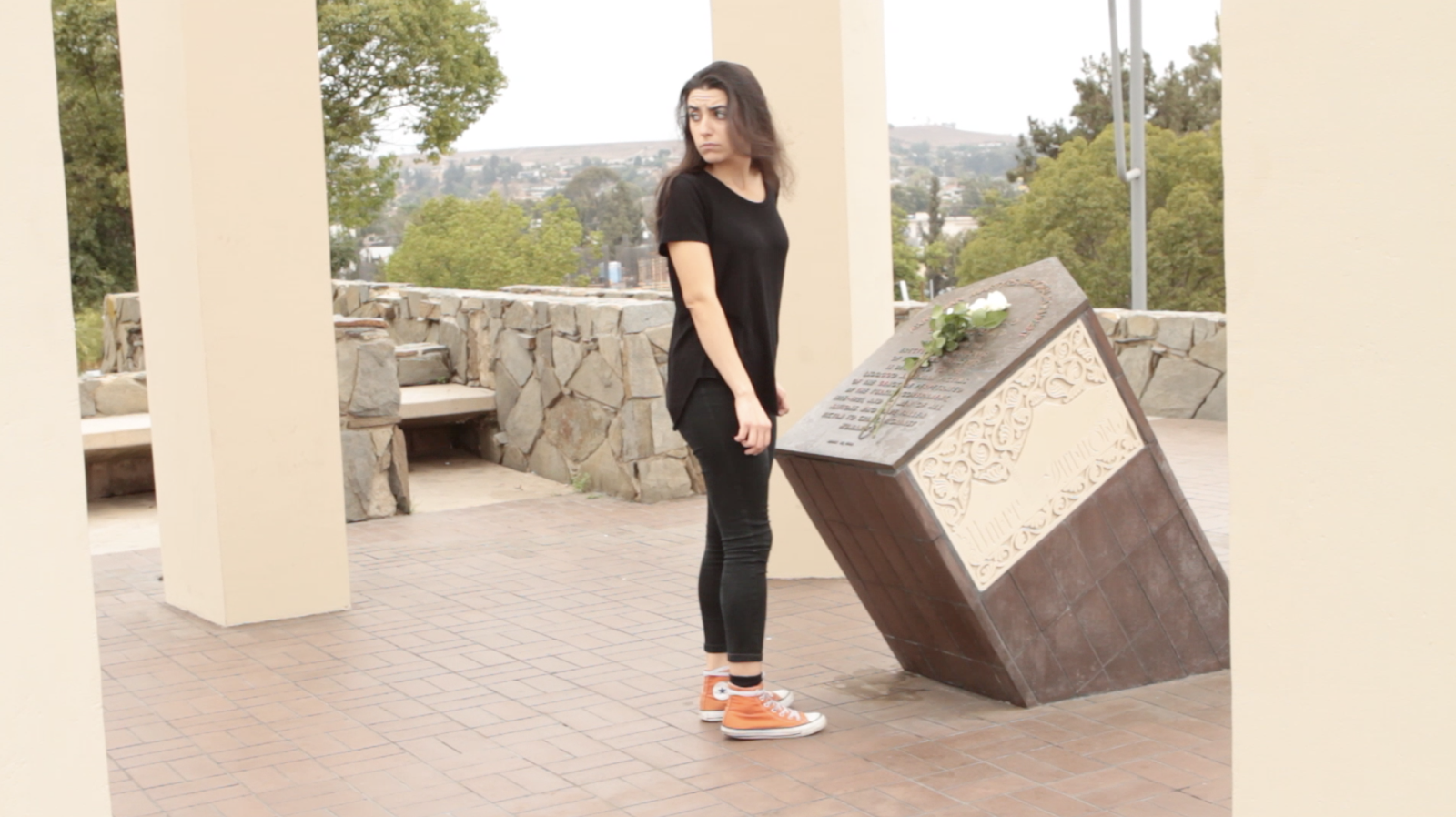
LGBTQ character Garo, played by Kyle Patrick Darling, is the main character Maro's best friend. Garo is gender fluid and posseses clairvoyant powers which he hides from people around him. Here are images with Garo in the scene.


Art Arutyunyan: “We are not going anywhere, and we will become a stronger voice in Armenian culture” 
- interview with Unzipped: Gay Armenia -


- In your ‘mini-bio’ on IMDb, it was mentioned that you were born and raised in Uzbekistan, then moved to LA to pursue a career in fashion. Could you tell me a little bit more about yourself, your family, your Armenian roots? And your move from being a fashion designer to film director/writer.

Both my parents were born in Armenia and moved to Uzbekistan in 1960-s, where they met. I was born in a small town, which didn't even have a name, but just a number: "Number-6". When I was 5 we moved to the capital of Uzbekistan, Tashkent, then a very diverse city with large Armenian, Korean, Jewish and other Russian-speaking communities. So, I was surrounded by a multitude of cultures. All of my friends and I went to Russian-language schools and colleges. As a child, I traveled to Armenia every summer as both of my parents still had a lot of relatives back home.

I was in High school when USSR collapsed. I got my Bachelors degree in Economics at Tashkent State University, then moved to Los Angeles to study fashion and found a job in the garment industry fairly quickly. The rest of my family followed one by one. I designed clothing for Forever 21, Nordstrom, Target, Kohl's, Macy's, and that was my specialty: affordable fashion. However, there was a point where my love for film kept pulling me away.

While I was still designing, I wrote and produced my very first short film with my now business partner, Armand Petri. And so our partnership began, and now we have "Together Magic Film Group" that consists of 3 divisions: "Reel Nightmare" - horror, supernatural, paranormal; "Together Magic Films" - LGBTQ themed; "Winning Streak" - dramas, comedies and other general public genres.

- Your quote from the same ‘mini-bio’: "It is important for me to develop scripts and concepts that I respond to on an emotional level rather than intellectual”. The topic of the Armenian Genocide must have been quite an emotional for you too. Do you remember any personal stories that your parents or grandparents perhaps told you?

The theme of Armenian Genocide has always been a part of my conversations with my father, who's a very passionate Armenian, perhaps the most passionate. I must admit, I didn't feel connected to the subject up until maybe a couple of years ago, when I was looking for a theme to write about. I started talking to my father about it again, and the stories just poured out of him, and his passion has definitely inspired me. I recorded our conversations and started doing more research.

Even though this is a historic event, I wanted to write about it in more dramatic terms, where the Armenian Genocide is a backdrop to a character, where it puts him or her through the tragedies. So, as of now I have written 2 scripts on the subject: "Armenian Haunting", a paranormal mystery and "Anoush", a drama that follows a young Armenian girl Anoush as she fights for survival in the 1915 Turkey. "Armenian Haunting" is set to be released this year, while "Anoush" is in need of financing. Ideally, I would like to shoot "Anoush" in Armenia with local crew and cast, of course, in Armenian language.

- Any news item, article, let alone the film about the Armenian Genocide are being treated with sensitivity among Armenians both in Armenia and Diaspora. Are you afraid of the reaction you may receive?

"Armenian Haunting" is at its core a paranormal mystery film. On the 100th anniversary of the Armenian Genocide, young Armenian American, Maro, finds herself in the midst of a mysterious plague that kills her family one by one. I wanted to make an entertaining and educational film that, hopefully, keeps the audiences interested and at the same time teaches them about the Genocide. I treat the subject with respect, but I do realize that there is a risk of getting unwanted reaction. I am a firm believer that Armenians everywhere deserve to have this story told in as many ways a possible. Same as the theme of Holocaust. Armenian Genocide needs to be told in different ways: dramas, horror, documentaries, historical series on PBS, you name it. It needs to become a strong cultural theme and soon! 

- I always wanted to see a film that will depict a same-sex relationship, love set against the backdrop of the Armenian Genocide. I understand your film’s storyline is different but how important for you to have an LGBTQ character in such film?

In "Armenian Haunting", the LGBTQ character, Garo is important not only as he provides Maro with important information, but also as a voice of frustration of the Armenian LGBTQ community. We are frustrated because we are not accepted and understood by our own people. In the film, Garo points out that Maro's family suffers from "Armenicus Mysogynisticus". It is absolutely important for me to represent LGBTQ characters in all kinds of different ways, including Armenian LGBTQ persons. It holds a special place in my heart.

- Do you plan to showcase it in Armenia? As you may be aware, last year the Golden Apricot international film festival based in Yerevan censored 2 Armenian LGBT-themed films. But I believe we should keep challenging it. Do you plan to submit it there? Or any other international and Diaspora film festivals?

"Armenian Haunting" will have Armenian subtitles and I hope to reach Armenians all over the world. And I agree with you, we need to challenge Armenian culture's attitude toward LGBTQ community. We are not going anywhere, and we will become a stronger voice in Armenian culture.

I am not thinking about festivals yet, but it definitely will be on my radar with "Armenian Haunting".

- In an email exchange you were very fond of the actors in the film. How did you know or chose them? I would imagine an indie film like the Armenian Haunting would have a small budget.

"Armenian Haunting" has a minuscule budget, so I had to make sure my script was in good shape before I approached actors. My main goal was to cast as many Armenian actors as possible, due to the subject matter. The lead actress in the film is an absolute gem, Vaneh Assadourian. I felt so lucky to have her on the set every day of the shoot. Vaneh brought that special quality and Armenian flavor to the role of Maro. 

- What is next in your pipeline? Any Armenian LGBTQ-themed storyline?

We are releasing a drama set in Louisiana, "Are You From Dixie?" this year, as well. It was written by my business partner, Armand Petri and I had an honor of directing it. And I am looking for financing for "Anoush" that features an important gay character. 
***
Look forward to watching the film, and will definitely keep an eye on Anoush and more works by Art Arutyunyan.

Few more stills from the Armenian Haunting film.


Tuesday, 24 January 2017

Australian Armenian same-sex marriage supporter Gladys Berejiklian appointed Premier of Australia’s most populous state

*picture - via FAIRFAX/Huffington Post

Australian Armenian Gladys Berejiklian was appointed Premier of Australia’s most populous New South Wales state (with capital Sydney). What makes this appointment a particularly good news for me is her support for marriage equality and LGBT community.

According to ABC, “She is a private woman who supports same-sex marriage, is compassionate towards the plight of refugees and helped sign off on the Government's signature infrastructure projects.”

Interestingly, Australian media specifically mentions that her support for same-sex marriage is “at odds with her Armenian Orthodox Church”.

In an interview with local media in 2015, Gladys Berejiklian said people had strong views about marriage equality but believed most people on the north shore would support a change in the law.
“I get a sense that as far as my electorate’s concerned that the majority — while I do know there are people who don’t support it and I want to acknowledge they’ve got a right to express those views — I would think the silent majority would support it, I personally do,” she said.
Australian Marriage Equality (AME) and Australians for Equality (A4E) today welcomed the support of the new NSW Premier Gladys Berejiklian for marriage equality.
“We congratulate Gladys Berejiklian on becoming Premier of NSW and thank her for her support for marriage equality and the LGBT community,” Australian Marriage Equality Co-Chair, Alex Greenwich said. 
“Premier Berejiklian joins a growing number of Liberal Party leaders who support marriage equality, including Prime Minister Malcolm Turnbull and Tasmanian Premier Will Hodgeman.”

From her bio on Wikipedia: “Berejiklian was born in Sydney, the eldest of three daughters born to Armenian immigrant parents, Krikor and Arsha. Her grandparents were orphaned in the Armenian Genocide in 1915. Berejiklian spoke only Armenian until she was five years old, when she began learning English.”

“Berejiklian became the second woman to hold the office of Premier, after Labor's Kristina Keneally, who served in the position from 2009 to 2011, and the first female Liberal Premier in Australia.”

Saturday, 18 June 2016

Armenia and Orlando

Armenia president Serj Sargsyan strongly condemns “horrendous manifestation of intolerance” and “any expression of hatred”. At least, this is how he formulated his reaction to Orlando in a letter of condolences to the US president Obama following attack on LGBT club Pulse.
President Serzh Sargsyan sent a letter of condolences to the President of the United States Barack Obama on a horrible terrorist act which took place at a club in Orlando, claiming several dozens of innocent lives and wounded. The President of Armenia strongly condemned this horrendous manifestation of intolerance and underscored that the misfortune, that has befallen the friendly American people, proves once again that any expression of hatred is still a serious challenge to the humanity and it is our shared responsibility and mission to address them.

ՑԱՎԱԿՑԱԿԱՆ ՆԱԽԱԳԱՀ ՍԵՐԺ ՍԱՐԳՍՅԱՆԸ ՑԱՎԱԿՑԱԿԱՆ ՀԵՌԱԳԻՐ Է ՀՂԵԼ ԱՄՆ ՆԱԽԱԳԱՀ ԲԱՐԱՔ ՕԲԱՄԱՅԻՆ 13.06.2016 Նախագահ Սերժ Սարգսյանը ցավակցական հեռագիր է հղել Ամերիկայի Միացյալ Նահանգների Նախագահ Բարաք Օբամային՝ Օռլանդո քաղաքի ակումբում տեղի ունեցած սահմռկեցուցիչ ահաբեկչության կապակցությամբ, որի հետևանքով զոհվել և վիրավորվել են մի քանի տասնյակ անմեղ մարդիկ: Հանրապետության Նախագահը խստորեն դատապարտել է անհանդուրժողականության այս զարհուրելի երևույթը և ընդգծել, որ բարեկամ ամերիկացի ժողովրդին պատուհասած այդ դժբախտությունը կրկին ապացուցեց, որ ատելության բոլոր դրսևորումները, որոնց հաղթահարումը բոլորի հավաքական պարտքն ու առաքելությունն է, նույնիսկ 21-րդ դարում շարունակում են մնալ լրջագույն մարտահրավեր մարդկության համար:
4 years ago his party spokesman Eduard Sharmazanov (currently deputy speaker of the Armenian parliament) endorsed firebombers of gay friendly DIY bar in Armenia capital Yerevan.
“All those who are trying to protect homosexuals, who are perverting our society, are defaming the Armenian national identity. As an Armenian citizen and member of a national-conservative party, I find the rebellion of the two young Armenian people against the homosexuals, who have created a den of perversion in our country and have a goal of alienating the society from its moral values, completely right and justified. And those human rights defenders, who are trying to earn cheap dividends from this incident, I urge them first and foremost to protect the national and universal values”, said Eduard Sharmazanov.
He echoed his colleague, MP from ARF Dashnaktsutyun party Artsvik Minasyan (currently minister of economy) who justified the attack towards LGBT friendly bar, saying the firebombers acted in accordance with the "context of our societal & national ideology, in the right way”. It was then revealed that Armenian MPs from the ARF Dashnaktsutyun party Artsvik Minasyan and Hrayr Karapetyan bailed out one of the detained arsonists, while the other one was released on signature that he won’t leave the country.

DIY firebombers were effectively pardoned. They got conditional sentencing and a symbolic fine.

And now Armenia president condemns Orlando using pretty strong wording, albeit without the mention of “LGBT”. A change of heart or simply a hypocrisy directed at outside world? How genuine Armenia president was when condemning Orlando would be determined by whether his regime would indeed crack down on anti-LGBT hatred inside Armenia.

Following Orlando, a significant proportion of users (not just trolls) on Armenian social networks, particularly the Armenian segment of Facebook, either kept silence or could not resist their ‘happiness’ at killing of LGBT people.

They were effectively proclaiming the killer a hero. These are the same people who change their profile pictures demanding the world to recognise the Armenian Genocide. These are the same people who were outraged when an axe murderer of Armenian was pardoned by Azeri president and turned into a ‘national hero’.


One of the organisers of Orlando solidarity event in Yerevan, executive director of PINK Armenia Mamikon Hovsepyan, said “it was painful for him to witness Armenians’ reaction to the attack, which included advocacy of hatred and insults targeting the LGBT+ community.”
“People without the elementary capacity to think began to justify the criminal. I do not understand how a crime against humanity can be justified. Many in Armenia have been aggressive and have even expressed support for the terrorists, inviting them to Armenia, which is very sad and inhumane. Today we came here to express our solidarity with the families of the victims.” Hovsepyan said.

The activist added that he was left “dumbstruck” by Armenian President, head of ruling Republican Party Serzh Sargsyan sending his condolences to U.S. President Barack Obama in connection with the shooting; “It would have been great had [the condolences] been genuine and heartfelt. But I don’t believe it; because the same party that justified 4 years ago [the attack on a LGBT-friendly pub in Yerevan] today extended its condolences in connection with a similar act. I do find it ironic, and yet I’d like to believe that they’ve changed.” 
It was disheartening to read PINK Armenia calling fellow Armenians ‘to respect innocent victims & not defend terrorist acts’.
We call on our fellow Armenian friends and citizens to respect the innocent victims, and not to defend terrorism and terrorist acts.

Կոչ ենք անում մեր հայրենակիցներին հարգել անմեղ զոհերին, այլ ոչ թե պաշտպանել ահաբեկչությունն ու ահաբեկչական գործողությունները։
Even two main US-based Diaspora Armenian publications (Asbarez and The Armenian Weekly) kept silence on Orlando for 3 days, before posting a more general op-ed or a report from Yerevan. As my Facebook friends noted, it's because no straight Armenian was killed.

I have to say that mainstream media in Armenia, at least on this occasion, overall reported on the events respectfully, including regarding LGBT people (example).

As was mentioned on the Russian service of BBC, in relation to reactions in Russia, this event showed that not everyone in our society a homophobe ("У нас есть четкое понимание того, что общество уже не едино в гомофобии.”). This is applicable to Armenia too. Not necessarily the most optimistic conclusion but a basis for hope.

Wednesday, 1 July 2015

Turkey’s Armenian MP Garo Paylan: I want “new world” founded on equality

We need more MPs like Garo Paylan both in Turkey and Armenia, and beyond. The world, and the world of politics, will be a better place with them.

Highly recommend this interview by Armenian Weekly’s Nanore Barsoumian with the newly elected ethnic Armenian MP of the Turkey parliament from progressive LGBT-friendly HDP party.

*Garo Paylan (Photo: Nanore Barsoumian)

Selected extracts below /emphasis mine/:

“Three weeks after his election into Turkey’s Parliament on the People’s Democratic Party (HDP) list, Garo Paylan spoke to the Armenian Weekly about his path to parliament, and the challenges of being an Armenian in Turkey’s political scene.

During the interview conducted in Istanbul, Paylan also discussed issues that are close to his heart, including the HDP’s politics and commitment to creating what he terms a “new world” founded on equality.”

Says Garo Paylan: “Turkish citizens want the change—so they will vote for whoever speaks the new language for them. We wanted equality, and they heard us. It’s the radical democrats that for the first time are offering equality. We are radical democrats and we have everyone sitting at our table. This is why we have to struggle for LGBT rights, for the Armenians, the Kurds, and the Alevis. We have to offer equality to every identity.

Of course, we had some concerns. For instance, we were concerned that people were not ready to hear about the Armenian Genocide. Yet, we are vocal about the Armenian Genocide. We also support LGBT rights, and equality between men and women—everything that is considered radical about democracy. This is about [creating] a new world.”

“The AKP thought that insulting Armenians will gain them the Muslim votes, but it didn’t work. They tried to spotlight the fact that we had an LGBT candidate, thinking that it would affect the conservative vote, but it didn’t. There were other similar attempts, but they also failed. This is important. Our words won. We trust our words. This is what’s most important.”

Saturday, 25 April 2015

Armenia: System Of A Down remembers all victims of the Genocides, including gays, in a live concert in Yerevan

By making the parallels between the Armenian Genocide and the Holocaust, the animated on-screen introduction to the part 2 of the SOAD’s concert declared [see from 49:25 - captions below in Armenian, in the video - with English voice-over]:


[“Inspired by the example of openly committing mass murder with impunity [the Armenian Genocide], he [Hitler] became an architect of the new Genocide - the Holocaust, Nazi Germany’s evil campaign to rid Europe off Jews, Poles, gypsies, gays, the disabled and all those who did not fit in Hitler’s twisted vision of “pure race”.]
They then went on with more current examples of the “terror that persists”. “We can no longer seat back and watch those dreadful acts committed around the globe. Time to wake up the souls.”

Hear this, Armenian and worldwide fans of the System of the Down. Embrace the diversity. Hear this, Armenian politicians and other world leaders. Your oppressive politics will be eventually rocked apart.

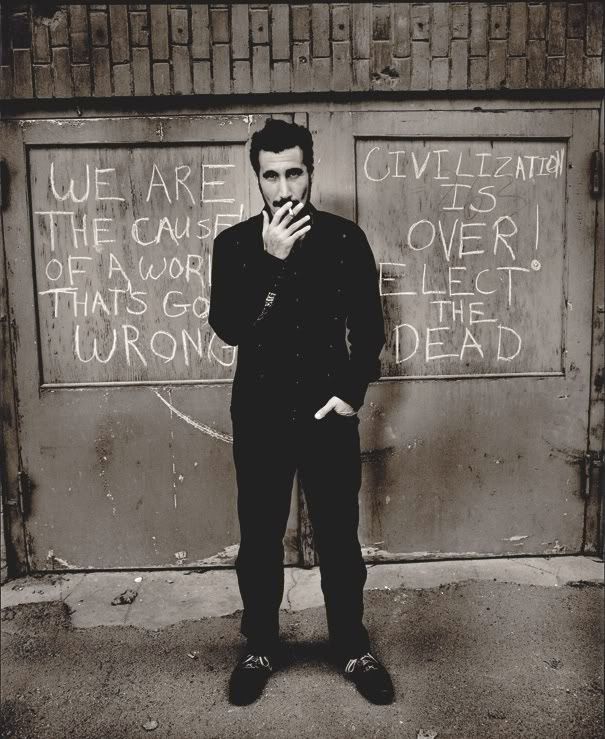
Says Serj Tankian live in Yerevan: “There is still fucking work to do [in Armenia]. It’s a responsibility of the government to bring in the principles of the egalitarian civic society, getting rid of institutional injustice and stopping depopulation that is occurring.”

This was in line with Serj Tankian’s previously expressed support for environmental issues and LGBT human rights in Armenia: Prominent Armenians (including Serj Tankian) issue statement in support of LGBT human rights

As victims of the Genocide, Armenia and Armenians should lead by example, by embracing diversity.

I want to hope that particularly younger generation who got inspired over the last few weeks with Kanye West’s awesomely crazy impromptu gig in Yerevan, Kim Kardashian’s ability to shake off the routine and bring world media’s attention to the country, SOAD’s epic concert, and the presence of so many diverse awesome people both in Armenia and in Diaspora, will challenge the status quo by making Armenia a country of our dreams, where everyone, regardless of gender, race, ethnicity, sexual orientation, disability will be welcomed and treated equally, with respect. By setting ourselves free of prejudices, we will provide the best evidence of failure of the perpetrators of the Armenian Genocide.

And as yet another evidence of such failure is the joint commemorations by Turks and Armenians in Istanbul of the centenary of the Genocide, despite Turkish government’s continuous denial and oppressions. Also, this joint statement by Armenian and Turkish LGBT groups marking the anniversary and pledging to fight together for human rights. And this very awesome personal story by gay Armenian Haig Chahinian, published on The Washington Post on the April 24th:
"I didn’t have to procreate to carry on my Armenian-American family legacy. As a gay man, I couldn't marry the Armenian woman my father hoped I would. But I can still honor our traditions."

It’s very telling that The Guardian’s great coverage of the Armenian Genocide topic this year included the interactive format for the descendants’ family stories, a format used for the similar accounts of racial profiling in the US and experiences of LGBT communities around the word, as stated by The Guardian’s Maeve Shearlaw, in an interview with Armenian Mediamax agency.

"This isn't a rock’n’roll concert. To our murderers, this is revenge" - said System of a Down's Daron Malakian, during live concert in Yerevan.

Here is for the next 100 years.

Friday, 17 April 2015

Joint statement by Armenian and Turkish LGBT groups re centenary of the Armenian Genocide

Kudos to the signatories of this statement - PINK Armenia and Kaos GL. Great example of solidarity between Armenian and Turkish LGBT groups.
Pink Armenia and Kaos GL made a joint statement to mark the centenary of the Armenian Genocide, commemorating those killed, and underlined that they will fight against homophobia, transphobia, racism and nationalism together. 
*Armenian version 
*Turkish version

One hundred years ago, a huge crime was committed on the land that we have been living together, one unpardonable, irreversible crime, which can by no means be compensated. In order to shatter Armenian people, their culture, social and economical set up into pieces Great Crime/Meds Yeghern caused pains that cannot be located in the language of cold statistics. In the process of massacre, Assyrian and Greek people in Turkey had also been the target of systematic extermination policies. We still witness the effects of the unpardonable Armenian Genocide that had been initiated by Ottoman Empire.

We, as LGBT organizations struggling against homophobia and transphobia in Armenia and Turkey, call both LGBT and overall public societies to confront with what had been lived. We recapitulate our call for confrontation with genocide and protect our lives dimmed by hands of nationalism and state policies. As well as being against homophobia and transphobia, struggling against racist, nationalist and sexist policies in our region, We, as Pink Armenia and Kaos GL, commemorate everyone killed a hundred years ago and express once again that we share the painful memoirs and are in solidarity with the Armenian population scattered all over the world.

Today, struggling against racist and nationalist ideologies of homophobia and transphobia, which have intertwined with racism and nationalism both in civil society and public space all throughout the countries in our region including Turkey and Armenia that resulted in genocide is more important than ever. State-handedly institutionalized racist and nationalist discourses turn borders of our countries into impassable borders in between communities. The way to pass beyond the intercommunal borders is to act with solidarity via creating horizontal networks. Only our struggle will make it possible to get rid of abstract discourses of equality, justice and freedom, and to put our struggle at the center of our lives.

Armenian Genocide is a source of shame for all humanity. This shame and the scares of this massacre left us with big questions to answer. Assassinated by the people of 1915 mentality, the question posed by Hrant Dink, the Chief Editor of Agos Journal, is still waiting unanswered:

“Are we to act just like the responsible persons of the past extreme catastrophe or shall we take our lessons from past errors and write the new pages like civilized human beings?”

We, as Pink Armenia and Kaos GL, will strive to find answers to this question through our struggle. The way to be liberated with the ‘rainbow’ is through giving voice to the truths that have been overshadowed by nationalism.

PINK Armenia & Kaos GL


Friday, 15 August 2014

Opinion: “The reality of gay Armenians and our collective shame”

I have to say, I am pleasantly surprised with the Armenian Chronicles. While it’s their recent LGBT related postings that primarily grabbed my attention, I quickly glanced other pieces too and some contained refreshingly challenging points of view.

Back to the LGBT related postings, the latest piece by Kyle Khandikian follows nicely previously posted by Shant Jaltorossian My Life As a Gay Armenian [x-post on Unzipped: Gay Armenia Armenian Chronicles: "If you are an LGBT Armenian, speak up”], and more specifically explores the very familiar to every Armenian issue of “shame”, or “ամոթ”, and how it affects and fuels a “larger system of oppression” in Armenian communities both in Armenia and Diaspora.
***
Selected extracts via the Armenian Chronicles below:


[…] The existence of gay men and women in our community has yet to be fully acknowledged and is a reality that many of us still approach with hostility. Why have we yet to come to terms with this reality? The answer is a difficult one, but one that I believe is closely related to our shared value of shame. 

I’ll never forget the words uttered with remarkable incredulity by one of my peers in high school as I sat on the floor in between the shelves of our school’s bookshop one afternoon. I overheard the tail end of the conversation, but it was all I needed to hear. “Gay Armenians? I’ll kill them.”

Violence is something not uncommon for those who identify as LGBTQ, but as the arc of morality bends toward justice for many in America, there are pockets of communities where to be openly lesbian, gay, bisexual, transgender, and/or queer still means to live in constant fear for your life. The Armenian-American community is one such place where the closet door could not be shut tighter or locked up better. In the Republic of Armenia, the situation for LGBTQ people and other minority groups is deplorable to say the least, as noted in an Amnesty International report released last year entitled, “Armenia: No Space For Difference.” But what is striking to me is how a culture of shame still engrosses even the youngest and brightest minds of our communities here in America, and for those who must experience and live with that shame, how it is internalized.

The extent at which homosexuality and socio-cultural deviance is vehemently combated in our communities is exemplified by another personal experience. I had the pleasure of serving as the student body president of my private, Armenian Apostolic high school during my senior year. Every year the student council organizes a spring formal, and as per school policy, students are welcome to brings guests from other schools if they provide a signed note from the other school. When a male student brought back a note for his male cousin who attended another Armenian school and had many mutual friends at our school, homophobia reared its ugly, aggressive head. I was told repeatedly by an administrator that those things were “not natural” and that even though the students were cousins and not romantic partners, the rule was clear: boys do not bring boys to a school dance. This is the same school where “Yes On 8” flyers were distributed in 2008 in support of the California ballot proposition that successfully outlawed marriage equality in the state for five years, and where paper topics on the gay marriage debate were rejected in English language class because, to paraphrase a teacher, “it would anger the church.” There is something to be said about a community that chooses a clear side in a debate it has no interest in participating in. On most things LGBTQ, this community is largely silent.

There is a very false myth surrounding Armenian identity. It is the myth that we, regardless of religious creeds, national identities, political leanings, spoken languages, etc., are all Armenians. The truth, however, is that to deviate from the mainstream in this community means to be shunned and persecuted for not living up to fabricated norms and expectations. Identifying as LGBTQ is one such deviation, arguably the most abhorred by our fiercely patriarchal and heteronormative culture. Armenians are a diverse people, and that diversity does not suddenly end when it comes to sexuality or gender. There is an undeniable taboo surrounding homosexuality, and that taboo is just one part of a larger system of oppression that is fueled, in my opinion, by shame. […]

It pains me to say it, but we are an intolerant people. It is ironic too considering that intolerance has taken its most evil form against us: genocide. Our intolerance for things that are different or unfamiliar, I think, is closely related to the perceived shame it brings to the family and community. Emotion researchers have distinguished shame from other similar emotions like guilt by noting its external orientation; shame typically involves being negatively assessed by others and is most often felt in the presence of others, an important point for gay and lesbian Armenians which I will touch on later. […]

Ask yourself this simple question: how many gay Armenians do you know? The answer for almost all of us should be nearly none, because shame has left no space for them to exist openly. If we recall that shame is an emotion experienced in the presence of others, meaning that those of us who are prone to shame feel it most when we are with the communal group, and that in our culture shame is associated both denotatively and connotatively with words like “dirt,” where else do LGBTQ Armenians have to go but far away from the community? Perhaps I am pessimistic when it comes to this subject; of course there are openly gay Armenians, but none that we hear of. They are not a part of our community or our nation, because our community and nation has singled them out and excluded them as an Other, as gyot-s (faggots). There are no openly gay Armenians in our institutions or in our schools, none that are creating a culture that is welcoming and safe, who are fighting for our youth and shouting the good news from the tops of the iron ladder of hopes: that it is not shameful to be gay and that it will get better and that you can be Armenian and gay at the same time and that those two identities are not antagonistic even though everyone around you is telling you that they are…

I most certainly recognize the unique position diasporan communities hold as culture bearers around the world, especially having attended a school whose purpose was the preservation of the Armenian language and culture. But at what costs will we cling to certain aspects of our culture that no longer serve us, aspect of our culture that curse and destroy us? As diasporans we have the luxury of being able to move in and out of our community. We should not have to, but the option exists. But let it be a sobering reminder for those who continue to force some of us out that for our brothers and sisters living in Armenia and other countries where the closet doors remain firmly shut, that option does not exist. They must live in constant fear for their lives. That is truly shameful. 

I was in Turkey three years ago where I attended Istanbul Pride. To see a gay pride parade in a country that has struggled for almost all of its existence to strike a balance between Western modernity and religious tradition was remarkable in itself, but something else caught my attention, something that was so surprising that I struggled at first to make sense of it. Among the sea of pro-gay signs held by marchers were ones in Armenian! One of the signs was simple and clear: hos enk varjuhvetsek («Հոս ենք վարժուեցէք»), meaning “We are here, get used to it.” It is happening in even the most unlikely places. It is time we let go of our shame.

Sunday, 24 February 2013

NIV, the novel: Tel Aviv, Karabakh, four lovers, two centuries

Time for a confession. One of my New Year resolutions was to devote enough time to reading books. Unfortunately, due to work, travel and current events, I keep failing on this. True, people say we make New Year resolutions to fail them, but I really-really want to see this one fulfilled. There are so many intriguing books both on my book shelves and my ipad waiting to be read...

Anyway, here is the first book I will be reading, as soon as I find time, that is. This is a debut novel "NIV" by Israeli author Itamar S.N., published towards the end of 2012, and as far as I am told, touches the gay-themed topics with that of the Armenian Genocide, Karabakh, cross-border love and so on.

Consider this post as a kind of ‘info post’. As soon as I read the book (courtesy of the author), will post my reflections too. In the meantime, if you read the book first, please do share your reflections with me.


The novel comprised of two storylines: one contemporary gay Tel Aviv and the other one in around the time of WWI in Karabakh (1914).

As the author told me: “...while the book deals with issues which appear contemporary, it actually explores the timelessness of the human struggle to forge relationships. Two stories unfold in two different times and at two different locations, finally merging as one, with a touch of the supernatural.

One is the story of a young gay artist in today’s Tel Aviv, who falls in love with the agent in he backdrop of a modern society that still sits in judgment and makes it difficult for them to openly express their affections.


The other story takes place in Karabakh on the brink of WWI where a Muslim young man and a Christian young woman try to honor their commitment to each other in the midst of surrounding bloody events that demonize each in the eyes of the other’s family and community.


These four characters are actually two souls in different incarnations, which in a bright moment meet and recognize their parallel struggles. Their meeting results in the closing of their karmic circle, allowing the present day characters to evolve.”

And here is a description by publishers: “Niv, Erez, Katya and Anush are four young lovers who each experience a sexual awakening that threatens the rigid religious values and social attitudes that surround them. These pressures, the concerns of their families and the course of history itself, mean each must fight for the freedom to find their own way in life and the right to love the one they choose.

In this his first novel, Itamar S.N weaves together parallel stories to reveal tragic secrets and hidden truths. From the rural borderlands of Armenia and Azerbaijan at the time of the First World War, to the buzzing, cosmopolitan art scene of 21st century Tel Aviv, NIV is a story that will intrigue, surprise and inspire.”

I am certainly intrigued with the descriptions and with the Table of Content (!):

  • Tel Aviv August 2011 
  • Karabakh September 1914 
  • Tel Aviv September 2011 
  • Karabakh December 1914 
  • Tel Aviv September 2011 
  • Tel Aviv / Baku December 2011 


*The novel is available in Amazon in paper as well as kindle and bookshops (mostly gay) in Europe and the US.

Saturday, 7 July 2012

"I sign this petition in memory of my great-grandfather" - To the Government of Armenia: Honor the Constitutional Right of Each Citizen [including LGBT]

As I posted earlier, the Armenian Gay and Lesbian Association of New York has sponsored historic petition co-signed by 20+ leading Armenian cultural figures who have unified their voices to support human rights in Armenia. This is the first time such a petition has been created in support of LGBT human rights in Armenia.

Chairman of Golden Apricot International Film Festival, one of my favourite film-makers, prominent Canadian Armenian director Atom Egoyan is among those who co-signed the petition.

It has since been supported by more than 300 (at the time of writing this post) Armenian and foreign citizens, including well known activists, cultural, art figures.

Comments are being posted under the petition by people who signed it.

Here is a very touching one by Christine Allen:
My great-grandfather, Shukrey Sanjiyan, was brutally attacked during a pogrom in Tarsus on November 15, 1895. He managed to survive and made his way to the U.S. via France in 1897. The rest of his family was slaughtered during the genocide. It is in his memory that I, his lesbian great-granddaughter, sign this petition. My wife and I have been together for over 26 years and our youngest daughter, Kalie Sanjiyan, carries his name. I work for equal rights for all people in America, and I support equal rights for all people in the homeland of my heart, Armenia.
[For more comments - follow this link to the petition.]

Please sign and share the petition with all your friends, family and allies[The Armenian translation has now been posted with English original]

Friday, 22 April 2011

Armen Ra - US-based Iranian Armenian Theremin virtuoso - Crane, Komitas and more...

Absolutely brilliant!

Crane, Komitas


*via Wikipedia:

Armen Ra is an American artist and performer of Iranian-Armenian descent.

Born in Tehran, Iran, he was raised by his mother, a concert pianist, and his aunt, a renowned opera singer and Ikebana master. He taught himself to play Theremin, and is one of the best known players of the instrument alive today. His music fuses Armenian folk music with modern instrumentation, along with melodic lounge standards and classical arias. His concerts are known for their combination of both visual arts and his music.

Armen Ra has played at The United Nations, Wiener Konzerthaus Mozartsaal Vienna, CBGB's, Knitting Factory, La MaMa E.T.C., Joe's Pub, Boulder Museum of Modern Art, Lincoln Center, The Gershwin Hotel, B.B. King Museum, and Dietch Projects. He has been featured on and appeared in: CNN, HBO, MTV, VH1, Vogue, The New York Times, The New York Post, The Village Voice, Rolling Stone, and Glamour.

Having performed and recorded with various bands and on many projects (including a collaboration with legendary British recording artist Marc Almond, on the song "My Madness & I" from his 2010 release, Varieté), Armen Ra is considered one of the finest Thereminists in the World today. His debut solo CD, Plays The Theremin (released on Bowl & Fork Records in 2010), showcases many Classical Armenian laments and folk songs, representing both Armen's Heritage and his very first musical influence.

He currently resides in Hollywood, California and is openly gay.
***
Exile


Official website

Saturday, 9 April 2011

"Armenians and Gays Together": Armenian Apostolic Church and... LGBT rights (UK Progressive)

Just came across this article on UK Progressive website. A must read, and kind of hilarious in terms of parallels the author is making.

*via UK Progressive
About the author: Carl Matthes is a native of Los Angeles and has lived in Eagle Rock for over 40 years. He is a former president and a current Board member of Uptown Gay and Lesbian Alliance. He is a former columnist and a current advisor to the Lesbian News, the oldest lesbian publication in America. He was editor of the GLAAD (Gay and Lesbian Alliance Against Defamation) newsletter and a former GLAAD National Board member. He has also been a Board member of AIDS Healthcare Foundation.

Armenians and Gays Together

The Armenian Apostolic Church found itself coupled with gays and lesbians on the pages of the April 2, 2011, LAEXTRA section of the Los Angeles Times. While it wasn’t, necessarily, a match made in heaven, and certainly not Church sanctioned, the juxtaposition of the two articles was logical.

The logic? Both minorities are fighting to have their histories chronicled and recognized.

“For All to See,” an article by Bob Pool, headlined: “Armenians hope freeway markers will lead to wider acknowledgment of the massacre of 1.5 million.” Topping the article was a photo showing Archbishop Moushegh Mardirossian of the Armenian Apostolic Church blessing a sign which read,” Armenian Genocide Martyrs Monument Next Exit.” (The signs are along the 60 Freeway in Montebello.)

Nestled next to the picture was a second article “A fight over gays in textbooks,” by Patricia McGreevy. Ms. McGreevy announced that, “A California (Senate) bill (SB 48) to require teaching about the contributions of gay people draws fire.”

The Armenian Apostolic Church, one of the most ancient Christian communities, hasn’t been this close to gay men and lesbians in 2,000 years!

Spotlighting America’s exceptionalism, both communities are flourishing in Los Angeles.

Early in the 20th century, gay men and lesbians began invisibly migrating to Los Angeles seeking human rights coupled with social freedom and acceptance. This phenomenon accelerated after the Second World War. For over a century, but growing exponentially during the last 20 years, Armenians have built vibrant and important communities in California. These newcomers have also sought human rights and the benefits of a free society. The Los Angeles area now claims one of the world’s largest Armenian diaspora communities – second only to Moscow, Russia.

And, both communities have emboldened their State representatives to fight for recognition of their histories.

“This is not just another freeway sign,” stated State Assemblyman Charles Calderon (D-Whittier), who authored legislation to construct the sign. According to Pool, “…Calderon described the tower as ‘a beacon that stands in the night’ for human rights.” The “Martyr’s Monument” freeway marker will direct visitors to the six-legged memorial tower, dedicated in 1968, to commemorate the 1915 massacre of 1.5 million people by the Ottoman Empire, part of which is modern day Turkey.

According to Ms. McGreevy, State Senator Mark Leno (D-San Francisco), who authored SB 48, emotionally pleaded, “In light of the ongoing and ever-threatening phenomenon of bullying…and suicides…the teaching about the contributions of gay, lesbian and transgendered (folk) throughout history…students would better understand that we are talking about a civil rights movement.” Leno had earlier invoked the name of Seth Walsh, a 13 year-old who committed suicide after facing gay-bullying at school.

There is no doubt that these communities deserve recognition of their human rights, an accurate historical record and full illumination of past events. These are tough goals.

For instance, in countries with active Orthodox churches, as in Islamic countries, gay men and lesbians have had to be extremely careful and closeted. In 2002, when Armenia joined the Council of Europe, it’s criminal code had to be amended removing references to gay men and criminality. (Lesbian sex was never banned in Armenia.) In the United States, it wasn’t until 2003, when the U.S. Supreme Court struck down anti-sodomy laws in Lawrence vs. Texas, that homosexual acts were no longer criminal. Hooray for the courts!

I’m struck by the tremendous passion exhibited by Armenians regarding the exclusion of this genocide by political systems and historians. They perceive that this diminishes their stature as a people. If history won’t even recognize this atrocity against the world’s oldest keepers of the Christian faith – what chance does any other human rights struggle have? Armenians want the historical record to be corrected, changed and enlarged – whatever it takes to acknowledge their humanity.

And, so it is with the homosexual community. Biblical records regarding gay men and lesbians need to be deciphered through a loving God, not the vengeful God of 2,000 years ago. The Orthodox Church has been pulled into the 21st century. Their most recent declaration that, “Representing God’s will towards homosexuals requires firm, patient, compassionate, loving and gentle correction…” has moved away from early Old Testament Biblical references to killing homosexuals.

There are three other 21st century markers which show change:

First: Freeway signs. Now used by Armenians but used earlier, by Uptown Gay and Lesbian Alliance (UGLA).

Second: The 1998 establishment of Gay and Lesbian Armenian Society (GALAS) to help lgbt “Armenians who are looking for friendship, support and a sense of belonging in the community.” GALAS held its fifth annual Armenian LGBT Conference titled “Breaking Through: Legally, Politically, Culturally” last year at Plummer Park Community Center in West Hollywood.

Third: Armenian/American female Chastity Bono, writer and activist now known as transgendered male Chaz Bono. Her/his mother, the one and only gay icon, the world-famous Cher, is the daughter of an Armenian truck driver and an Arkansas-born mother. Cher was born in El Centro, California, on May 20, 1946.

And, so it is!

Sunday, 29 August 2010

Today's Zaman: Turkish nationalist discovers his Armenian roots, or dissection of hatred

Thanks to the link posted under the comments section of Study: Homophobia is associated with... homosexual arousal, below are extracts from a relevant piece by Today's Zaman columnist Orhan Kemal Cengiz Was Hitler a self-hating Jew?
***

Once I heard a story about a Turkish nationalist who accidentally found out that his ancestors were actually Armenians. [...]

I believe in most extreme forms of hatred and stigmatizing certain groups there is an element of self-hatred. A person who obsessively fights against homosexuals may be fighting against his actual self, his homosexual dark persona. The one who hates the Roma may be fighting against his “colorful,” marginal threads to protect his dull life, governed by the dictatorship of “shoulds.” I have many times observed in Turkey that most hard-line secularists come from devout Muslim families, and with their Islamophobic attitudes they actually express their shame and discontent with their background.

When I first heard the story of this Turkish nationalist Armenian guy, I thought this was a divine message from God to him. All of a sudden he was given an opportunity to reflect on his entire life, his purpose, his attitude and the way he relates with other people. Did he receive the message? I did not believe that he had no clue about his background; he most probably kept pushing every sign showing that he is not Turkish into the dark corners of his subconscious. Apparently, later on, some undeniable evidence showed up and he entered in a kind of shock. Or maybe with this sudden revelation everything became much clearer. Things started to make sense.

Can he continue on with his life as if nothing has happened? After this kind of painful confrontation, nothing can be the same. He would either abandon his Turkish nationalism or become more and more nationalistic.

This guy did not know his background (at least consciously) and became a Turkish nationalist.[...]

This new revelation about Hitler’s genetic code is filled with food for thought about racism, human destructiveness and self-hatred. It provides us with a fresh perspective when looking at people who somehow hate others. And, of course, I hope it will help those who hate and stigmatize some groups; I wish they could see the real meaning of their hatred.

Monday, 26 April 2010

Bekhsoos: "A personal queer look at the Armenian Genocide"

A queer Arab magazine Bekhsoos posted a correspondence between two gay Armenian Lebanese women sharing their very personal outlook at the Armenian Genocide:

Dear Sarag,

When I first realized I was queer, it wasn’t anything shocking for me as I was always the minority of some other minority.

My first cause ever was the Armenian genocide and I held on to it like someone holds on to their dear life. The idea that another group wanted to erase something very essential in my being and eradicate it was enough for me to want to resist.

It’s not easy to know that someone wants you to no longer exist.

So when I look around now and I think of the homophobia and the people who want to eradicate us because for them we are a disease, it’s not something new. When I think of all the gendercide and how a lot of our societies break women and burry their existence in petty beliefs, it’s not something new.

I am a queer Armenian Lebanese woman; a half-breed to add to that and this is the essence of my survival. For 95 years our people have been screaming for justice and we will keep on shouting and screaming even when the dearest feminists shout back but who cars about this now? How is it relevant to our cause?

I want to tell you how relevant it is. It is relevant because it is my cause and I am a feminist and it’s a human cause.

It is relevant because its Darfur and Gaza, it is relevant because when we got here we were thrown in camps and orphanages and built our lives from rubbles, it is relevant because women were raped and killed and children sold, it is relevant because justice has not been restored. And you know, when justice is not restored the whole order of your world crumbles. You ask me why I still want them to utter words or recognition? Because I want to be in peace, I want to believe in the good order of the universe, I want to know that the good prevails that there is hope. This is why I fight as a feminist, this is why I fight as a queer, it is why I choose these battles where small victories fuel me with hope

and I think of bigger ones.

Imagine you had 5 more years, only five years to prove that you’ve been raped and beaten, your land stolen. You had five years and you show humanity proof and ask for justice to be made and you know that once those five years go by, humanity’s corrupt system will erase your trauma from its history and move on. You are silenced and mute and your rapist still wandering out there. What would you do? We have 5 more years and then it’s the centenary and after that according to international laws our cause is a lost one. Wonderful example to give to states like Israel, practicing apartheid.

Love,

Shant

___________________

Dear Shant,

You already know, I relate to everything said in your e-mail.

I have always been a part of a minority, ever since I was born.

As I discovered more and more about myself, I became a minority of a minority and it has always been a struggle.

A struggle mainly for my rights. For my rights as an Armenian living in Lebanon, as a Woman, and as a Queer.

A struggle for belonging.. I was born in Lebanon but let’s face it, do I really belong here? It doesn’t really feel like it since I have always been pointed out as The Armenian among the Lebanese. It doesn’t really feel like it since el 3arabeh taba3 el arman mkassar, since we have a different culture and different traditions.

The next question would be. Do I belong in Armenia? Here… This breaks my heart. I don’t even belong in Armenia, because I am only a tourist there. A tourist that doesn’t even speak the same language as the Armenians there.

I have heard so much about Armenians since I was in school by my teachers, my parents, and my grandmothers. I have heard so many stories about my own family, about my own grandfather and my great grandfather and grandmother.

What do I do with all that? Get over it? Let it go?

It’s impossible…

It has become a part of me. A part of my core being.

It is in the blood.

What I find messed up is how countries like The United States or the European union use the Genocide as some joker card against Turkey. They don’t care about the recognition, they hold on to that card so that they can have political stances and gains. The U.S. gets to have army bases and fly into Iraq from over Turkey and the E.U. uses it to stop Turkey from getting in its sphere. And our history relies on their twisted politics.

We fight every day for our rights as queers. We want justice, we want acknowledgement.

We get frustrated and irritated. We go insane when we hear about all the queers and transgendered people that have been murdered.

All this blood spilled… Who could really get over it? Who could really accept it in the first place?

Hate, denial of our existence and their desire to annihilate us…

It’s something none of us should shut up about.

The Armenian cause is so close to all the other causes we believe in and fight for.

You don’t have to necessarily be an Armenian to feel this… You just have to be human.

And there is a big difference between human and “human”.

Love,

Sarag

Wednesday, 22 April 2009

Serj Tankian and... my Gay Armenia blog

Thank you so much to iddewes!! I am very touched, indeed... You know, I am a big fan of Serj, and happy to hear that he seems nice in real life too… :)

Via iddewes (+ videos):

...I did manage to get in to see Screamers at the Amnesty International centre. I was a bit worried because I'd heard that Serj Tankian would be there and I thought there would be loads and loads of SOAD fans there, and they always overbook there.

Anyway, it actually wasn't too bad. I guess the word didn't get out that much among the SOAD fans, because there were more people there who actually either looked Armenian or older and not necessarily metal fans than people who looked like they were primarily SOAD fans. Did talk to a couple of nice young boys who were SOAD fans though - tried to get them to come along to the Armenian Genocide march on Saturday too...;)

And yeah spoke to a young British Armenian guy too. He said he'd seen the film and that it was more about SOAD than the actual Genocide, recommended a documentary called The Betrayed - if you're reading this Artmika and I bet you are, do you know it? [Unzipped: Gay Armenia - I have not seen that BBC documentary The Betrayed, did few searches, sounds interesting.]

I arrived really early and had to stand outside for a while...there actually wasn't a queue, either. But I saw Serj arrive...and was too shy to say a thing to him!

Well the film was very good, anyway, yes it was quite a bit about SOAD but also about the genocide, I thought there was enough about the genocide as well, and then there was the Q and A with Serj, the filmmaker Carla Garapedian and two people from Amnesty; quite interesting to listen to them too of course. And then I finally did get to meet Serj at the end. I'd been texting Artmika that he was there but I'd been too shy to speak to him or take a photo - Artmika texted back 'forget about shyness, you have to get a photo!!' - ok so in the end my excuse for going up to him was not to say I admired him or anything like that but to tell him about Artmika's Gay Armenia blog! So yeah Artmika he knows about it now! He was very nice and did actually seem quite interested to hear about it and asked if Artmika lived in Armenia, etc.

So that was good too...I'd have been disappointed if he'd turned out to be an arrogant jerk, but he really wasn't like that at all. :)

*photo - via Independentmusic

Saturday, 21 February 2009

A History of Armenian Women's Writing 1880-1922 (new book)

Thanks to the reader of my blog AW, I received the info on this new book by Victoria Rowe "A History of Armenian Women's Writing 1880-1922". Seems very interesting. It's now available to pre-order via Amazon, with the release date (paperback) indicated as 4 March 2009.

Below are details via Amazon and Google Book. A preview of 2003 edition of (as far as I understand) the same book (or her PhD thesis) is available on Google Book.

Product Description (Amazon)
This classic, path-breaking volume restores the pioneering generation of 19th and 20th century Armenian women writers to their rightful place in the histories of modern Armenian and Ottoman literatures. The author reconstructs the biographies and bibliographies and analyzes the texts of six Armenian women writers and contextualizes their works in the intellectual and cultural milieus of the late Ottoman and Russian Empires.

(Google Book) The volume focuses on six Armenian women writers-Srpouhi Dussap, Sibyl, Mariam Khatisian, Marie Beylerian, Shushanik Kurghinian and Zabel Yesayian and these authors' novels, short stories, poems and essays. The study contends that Western and Eastern Armenian women writers, while not displaying a uniformity of opinion and vision, nevertheless found inspiration in the activism, writings and arguments of one another and form a literary genealogy of women's writing in Armenian.The study has several objectives. For general readers and those interested primarily in the historical account it provides a chronological description of the formative period of modern Armenian women's writing beginning in 1880 with the publication of a series of articles on women's education and employment by Srpouhi Dussap and concludes with the physical dislocations and psychological traumas of the Armenian Genocide in 1915 and the fall of the first independent Republic of Armenia in 1921.On another level the book concentrates on disentangling the contemporaneous intellectual debates about Armenian women's proper sphere. The author argues that the role of the Armenian woman was central to debates about national identity, education, the family and society by Armenian writers and women writers sought to participate in and guide this discourse through literary texts.

About the Author (Amazon)
Victoria Rowe specializes in Armenian literary history and gender studies. She received her Ph.D. from the University of Toronto, Canada upon completion of her doctoral thesis: The New Armenian Woman : Armenian Women's Writing in the Ottoman Empire, 1880-1915. Her articles on Armenian literary history and gender have appeared in numerous academic journals. She is the editor of translations of the works of Shushanik Kurghinian and Zabel Yesayian and has translated Inga Nalbandian's Your Brother s Blood Cries Out, (Gomidas Institute, 2007). She has taught Armenian literature at universities in Canada and Japan and is currently co-editor of Journal of Armenian History and Literature.

Tuesday, 30 December 2008

Turkish politician ‘nervous’ of possible SOAD performance for Armenia in Eurovision 2009

Even though there has been no formal announcement, other than rumours, that Serj Tankian or SOAD may represent Armenia in Eurovision 2009, the only thought of it makes some Turkish politicians 'nervous'. Rumours re SOAD/Serj which were circulating few months ago revived again very recently suggesting that another potential contender singer Arame is out now, and the likelihood of SOAD or Serj Tankian to represent Armenia in Eurovision 2009 is very real. But then again, I must repeat that these are still rumours.

Back to the news reports. Azeri APA news agency quoting Turkish sources reports that opposition MP from the Republican People’s Party (CHP) Akif Ekici urged Turkish PM to initiate actions to prevent SOAD’s performance of Armenian Genocide related or mentioning song (directly or indirectly).
The lawmaker asked the Prime Minister what measures would be taken for prevention of this group to join the Eurovision contest with this song. “Were Armenia and European Broadcasting Union addressed on this issue? What will happen if this group wins the contest with its song on so-called “genocide”? Would the world recognize “genocide” in this case, it wouldn’t?”
According to the Eurovision rules, explicit political songs are prohibited in the contest. However, there are always ways to get the message through via more indirect references, and there were number of examples of it in past.

Saturday, 18 October 2008

AFP: Taboo-free Turkish women writers strive to achieve equality

FRANKFURT (AFP - news report and photos) — "Of course Turkish women are stronger than men," says Perihan Magden with a laugh. Like her, many Turkish women writers provoke the wrath of officials with uncompromising works.

"I'm the national bitch anyway in Turkey. I think they just want me to shut up," she told AFP at the Frankfurt Book Fair.

Silence obviously does not sit well however with the small woman in her late forties, who was dressed simply in black and had tied her hair up in a quick knot. Asked about freedom of expression, persecution of Armenians and the situation of the Kurdish minority, she launches into animated discourse underscored by lots of gesturing. She also quickly forgets to speak about her book "Two Girls" that has been translated into German, which describes the tumultuous love affairs of two Turkish adolescents.

In Turkey, Magden is as well known for her novels as for her commentary in leftist media. In late 2005, she took up the defence of an imprisoned conscientious objector and was taken to court by the army as a result. Booed by the public during her trial, she was nonetheless acquitted, though several legal procedures are still ongoing. Magden now has trouble hiding lassitude in the face of what she said is chronic harassment. The former communist militant, "I would even say I was Soviet," would like to send her daughter to study in the United States "because in Turkey it can be very claustrophobic."

While Magden has been attacked for her views on military service, novelist Elif Shafak drew unwanted attention for comments made by figures in her books on what Armenians charge is genocide by the Ottoman Empire, a highly disputed subject in Turkey.

Armenia has campaigned for the the recognition of the mass killings of Armenians during World War I as genocide. Turkey rejects the genocide label and argues that 300,000-500,000 Armenians and at least as many Turks died in civil strife when Armenians took up arms for independence in eastern Anatolia and sided with invading Russian troops.

Shafak was prosecuted under Turkish law that prohibits "defamation" of the state, but was also cleared of the charges. The academic who was born in France now wants to turn the page. "I am too often assimilated" with the issue, she said in an interview published Thursday by the German magazine Stern. On the other hand, Shafak remains a staunch feminist. "We don't say enough about the history of women. History is always written by men. Religion was written by men," she said.

Another Turkish writer, Fethiye Cetin also takes aim at taboos, raising a fuss in the process.

In her novel "My Grandmother's Book", a best seller in Turkey according to the publisher, the human rights activist searches for Armenian and Christian roots that had long been hidden from her by her own family.

Cetin, also a lawyer who represents the family of Hrant Dink, a journalist of Armenian origin killed last year, tells the story of how her grandmother escaped the early 20th century slaughter. Invited to the stand sponsored by Germany's Green party, she insisted: "You cannot bury the past. It always rises back to the surface!"

Wednesday, 8 October 2008

Nancy Agabian: "Me as her again"


Nancy Abagian's new book Me as her again is out now. There will be various events to mark its launch in LA and NY over October-November 2008. I wish there is one in London or Yerevan too.

This is one of the highly anticipated and talked about books within Armenian literary and LGBT communities. My congratulations to Nancy! Can't wait to get hold of it and start the reading.

"Untangling knots of personal identity and family history, Nancy Agabian deftly weaves a narrative alternately comical and wrenching. Moving between memories of growing up Armenian and American in Walpole, Massachusetts, and her later experiences at Wellesley College, then Hollywood and, finally, Turkey, Agabian offers an illuminating meditation on the sometimes bizarre entanglement of individual desire (sexual and otherwise) in the web of family life and history. At the heart of this unraveling is a grappling with the history of trauma and upheaval experienced by her paternal grandmother, who survived the Armenian Genocide, and the legacy of that wounding experience for Agabian and her extended family."
***

What’s so refreshing about Agabian’s prose is her marvelously open, daring, and honest inquiry into the self. Our “enfant terrible” — she has yet again managed to capture us with her quirky, brilliant stories.
– Shushan Avagyan, author of Girk-anvernagir; translator of I Want to Live: Poems of Shushanik Kurghinian

My favorite song from Nancy Agabian’s improbably vivid “Guitar Boy” punk rock period a decade ago was the genius anthem “I Don’t Want to be a Victim Anymore.” Though as she noted at the time, when you’re a mousily timid, family-mired, Armenian bisexual artist, not tending toward victimhood isn’t all that easy. But you know what? By the end of this splendidly engrossing memory chronicle, she’s pulled it off. She’s no victim. What she is is funny, smart, generous and wise. And she’s my hero.
—Lawrence Weschler, National Book Critics Circle Award Winner, Everything That Rises: A Book of Convergences

http://nancyagabian.com/

(check out Nancy Agabian's new website. You won't regret it.)
***

As Nancy writes:
"You can also order it from Amazon, but I recommend buying directly from the publisher, Aunt Lute Books. Please give your support to an amazing multicultural, nonprofit women’s press."

Friday, 18 July 2008

Armenian-Americans join gay rights (marriage) debate

I was pleasantly surprised when noticed these "letters to the editor" published in the latest consecutive issues of The Armenian Weekly, which is a publication of ARF Dashnaktsutyun party. The topics discussed there are gay rights and marriage, taking into account broader aspects of Armenian issues and US politics. The authors of these letters rightly point out the need to view fight for gay rights and equality within a broader context of Armenians fighting for justice, including recognition of Armenian Genocide and other human rights issues.

Lets hope that their counterparts in Armenia, members of coalition government, will eventually embrace these issues too, and soon we will witness more postings and articles touching gay rights and equality in The Armenian Weekly and other media outlets, both in Armenia and Diaspora.
***

Dear Editor,

As a gay Armenian man, I feel that it is my moral responsibility to reach out to my fellow Armenian-Americans about a very important topic that affects all of us, the anti-gay marriage Constitutional Amendment on Nov. 4.

More than most, Armenians know how if feels to be a minority, oppressed by powerful establishments and regarded as second-class citizens. Incidentally, the gay and lesbian Armenian community is at a crossroads to achieve a milestone in gaining equality.

In the state of California, the Armenian vote is substantial and powerful, and the public needs to be educated on the facts and consequences of their vote. As a gay man, I have attended countless weddings of my family members, relatives, and friends and I hope that I can wed some day and invite all of them back to my special day. But powerful groups are lobbying to see that we are prevented from getting married and that our rightful victory in the California Supreme Court is overturned.

As Armenians, we are always asking government institutions, organizations, and individuals to resist the opposition, see the big picture, and ultimately do the right thing. This has been especially important in getting foreign governments to resist threats, bullying, and blackmail from Turkey in our quest to bring worldwide recognition to the Armenian Genocide.

I hope to see an article in your esteemed publication about this issue and I am confident that Armenians will ultimately do the right thing and support us.
Thank you and kind regards,

Vahe Gerami
Studio City, Calif.
*The Armenian Weekly, Volume 74, No. 26, July 5, 2008


UPDATE 29 September 2010: Second letter was removed upon request by the author citing personal circumstances.

*The Armenian Weekly, Volume 74, No. 27, July 12, 2008