Showing posts with label gender identity. Show all posts

Monday, 27 December 2021

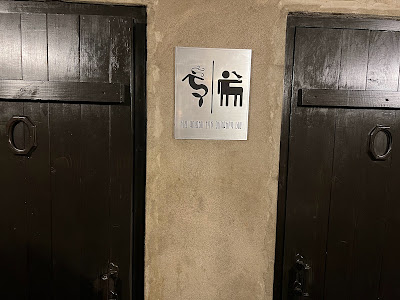
Creative gender neutral toilet - Barev Arev restaurant, Yerevan

This toilet instantly caught my attention. Gender neutral. Creative design. And a note, with Gyumri dialect and humour: «Ինչ գուզես էղի` ձերքերդ լվա» [‘Be whoever you want to be, but wash your hands’].

If you want to experience it, you have to visit recently opened Barev Arev restaurant in capital Yerevan [link to their FB page]. In fact, you may wish to visit Barev Arev for more than one reason. 

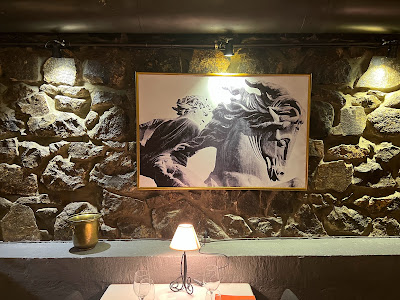
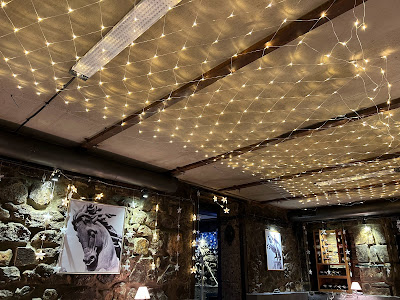
Cosy, intimate feel, with illustrations of our legendary epic hero Sasuntsi Davit (David of Sasun) whose image by Yervand Kochar was part of homoerotic fantasies of many queer Armenians (myself including).
Another reason is the chef who carefully designed the menu using local produce only. And he will provide you with an individual attention, explaining the choices on the menu (albeit limited for now but with a promise to expand) and helping to select from a wide variety of Armenian wines. 

I recommend.

Wednesday, 22 July 2015

Armenia president’s administration, ministries respond to LGBT rights letter

While replies from both president’s administration and ministries are vague and do not suggest any commitment by the authorities for tackling discrimination based no sexual orientation and gender identity, what is more important here is that PINK Armenia defied status quo and challenged relevant state bodies re their commitment for LGBT rights and against discrimination. It is the first time I could recall that Armenia president’s administration replies to LGBT rights related formal query.
***
Via PINK Armenia: “Necessary prerequisites exist in RA legislation to exclude any act of discrimination” - reads a formal reply from the administration of Armenia president in response to letter by PINK Armenia calling Armenian authorities to the call of PINK Armenia to protect LGBT rights.

To mark the International Day Against Homophobia and Transphobia, PINK Armenia addressed a letter to the Armenia president Serj Sargsyan, several ministries and MPs, with a call to provide in the Republic of Armenia legal provisions for combating discrimination based on sexual orientation and gender identity and to monitor cases of discrimination against LGBT people. The administration of the president noted further that “if there is a need for further legislative regulations, it should be noted that the president of the Republic of Armenia has no right to initiate legislation”.

PINK Armenia also urged president Serj Sargsyan not to award national prizes to individuals and organisations who spread blatant hate speech against LGBT citizens of Armenia and the persons involved in the protection of their rights, to which head of legal department of the president’s staff Grigor Muradyan clarified in the response letter that the person’s worldview is not considered when awarding prizes “if that person does not display any illegal behavior which is to become a subject of assessment of authorities in each specific case”. This part is particularly vague and

Replies were received from the Ministry of Health and Ministry of Justice too.

The Ministry of Justice noted that they have conducted a legal study on relevance of having a separate piece of legislation to combat discrimination, where the matters regarding discrimination have been analysed. [Unzipped: Gay Armenia - I wonder what did they conclude?!…]

The Ministry also reminded that in 2010 the Gender Policy Concept Paper was approved and Republic of Armenia Gender Policy Strategic Program for 2011-2015 was confirmed. [Unzipped: Gay Armenia - Unfortunately, these positive gender related initiatives are effectively stopped now, following Russia inspired hysteric anti-EU outburst]

The letter from the Ministry of Health stated that the issue is outside the jurisdiction of the Ministry of Health. However, the Ministry of Health is willing to provide assistance if recommendations from relevant bodies are made.

Wednesday, 17 June 2015

Intro: Armenian Feminist blog

Armenian Feminist blog was created by a group of feminists to raise awareness about women’s rights, gender equality and gender identity.


Its main aim is to reach out to the general public in Armenia, including the most remote areas, by making available important feminist texts in Armenian language.
Even with the vast information flow of the 21st century, there are still certain groups in Armenian society, which remain on the margins. Most often these are women who are cut off from the media and alternative modes of obtaining information about their rights, opportunities, etc.
Of course, it will be the most difficult to reach out to such groups, since if they are cut off from the alternative modes of obtaining information, then they would hardly read blogs.

The good news is that the authors of this blog started getting feedback and contributors from women in Armenian villages too. There is hope, afterwards. And this is a very encouraging sign, indeed.
This situation makes women more vulnerable to sustaining abusive relationships, dysfunctional family relations, abuse of their economic and political rights, etc. Even if these women have access to the media, the lack of coverage on topics that are considered taboo or irrelevant make these women subject to isolation, frustration, lack of acknowledgement. The general attitude of keeping quiet about taboo topics, which make people feel uncomfortable  contributes to the general attitude that there are no problems in society at all.
Along with translations, they make original postings and interviews too.

And the subjects of their posts are quite diverse: from Fem manifesto to domestic violence to problems facing by people with disabilities to the ways of dealing with menstruation among some transgender men.

I personally know the main creators behind this blog. Great bunch of people.

And if you wish to support their efforts, you may donate here.

Saturday, 30 May 2015

Educational short film on need for comprehensive anti-discrimination legislation in Armenia

This great educational short film (in Armenian), with the use of nice graphics and pics,  illustrates various types of discrimination, so widespread in Armenia, and why it is essential to have a comprehensive anti-discrimination legislation, including discrimination based on sexual orientation.


Մեկ հասարակություն ՝ մեկ իրավունք from EPF Armenia on Vimeo.

Saturday, 19 April 2014

Powerful posters against sexual violence in Armenia and South Caucasus

These bold and powerful posters prepared by the Armenian group of the Young Women’s Network of the South Caucasus (see their Facebook page).


There are stereotypes and prejudices that contribute to the rooting within the society of an idea that the victim is to be blamed for sexual violence, rape or sexual harassment. Young Women’s Network of the South Caucasus aimed at exposing such common stereotypes by encouraging the public to fight against them. “There is no justification for sexual violence” - say Young Women’s Network members.

“Ապրիլ. Սեռական բռնության իրազեկման ամիս. 
Մեր իրականությունում կան կարծրատիպեր և նախապաշարմունքներ, որ նպաստում են հասարակության մեջ այն մտքի արմատավորմանը, որ սեռական բռնության զոհն է մեղավոր՝ բռնաբարության կամ սեռական բնույթի ոտնձգությունների ենթարկվելու համար: Երիտասարդ կանանց ցանցի անդամները բարձրաձայնում են Հայաստնում, Վրաստանում Աբխազիայում և Ադրբեջանում տարածված նմանատիպ կարծրատիպերի մասին՝ հորդորելու հասարակությանը պայքարել դրանց դեմ: 
Չկա արդարացում սեռական բռնության համար՝ բարձրաձայնում են Երիտասարդ կանանց ցանցի անդամները:”

Tuesday, 21 January 2014

Human Rights Watch: World Report 2014 on LGBT rights violations in Armenia and Georgia, silence re Azerbaijan

Unfortunately, no similar section (Sexual Orientation and Gender Identity) is available within the country specific Human Rights Watch report for Azerbaijan. This is regrettable, as in a country with the poorest rights record in the South Caucasus, there is no doubts about violation of rights based on sexual orientation and gender identity too. Subsequently, without more publicity, LGBT rights in the country are moving even more underground and the issue is becoming even less visible while the rights abuses continue in Azerbaijan. Of course, the situation is exacerbated with the lack of active groups such as PINK Armenia (Yerevan) and Identoba (Tbilisi) in Baku.

Armenia

Sexual Orientation and Gender Identity

Local lesbian, gay, bisexual, and transgender (LGBT) rights activists have expressed concern for the alarming level of homophobia in Armenia. According to PINK Armenia, a local rights group, transgender women who engage in sex work are frequently assaulted and receive no police protection when they report abuse. PINK Armenia also reported that the LGBT population continues to experience employment discrimination, obstacles to health care, and physical and psychological abuse in the army, in public, and in families.

According to an August Amnesty International report, government officials frequently condone violent attacks against LGBT people, characterizing the violence as an expression of “traditional values.” In July, the Armenian police made a proposal to amend the code of administrative offenses to establish a fine of up to US$4,000 for promoting “nontraditional sexual relationships.” The proposal was subsequently withdrawn.

Also in July, a Yerevan court convicted two people for damage to property stemming from a bomb attack in May 2012 against DIY, a bar frequented by LGBT and women’s rights activists. Graffiti identified LGBT people as targets of the attack. One attacker was sentenced to 19 months in prison and the other received a two-year suspended sentence. They were both amnestied in October. Local human rights groups expressed frustration that the sentence was too lenient. Armenia does not have hate speech legislation.

Georgia

Sexual Orientation and Gender Identity

On May 17, 2013, a peaceful gathering to mark International Day Against Homophobia was violently disrupted by thousands of counter-demonstrators, including some Orthodox clergy. The day before, the patriarch of the Georgian Orthodox Church publicly urged the authorities not to allow the gathering, calling it an “an insult” to Georgian traditions. Police had to evacuate the LGBT activists to safety, but they failed to contain the mob, which attacked a van carrying the activists, throwing stones and other objects; one journalist was hit on the head and briefly hospitalized. Authorities charged two Orthodox priests and three other men with obstructing freedom of assembly and petty hooliganism. The Tbilisi City Court ordered that charges be dropped against one priest. At time of writing, the trials against the others were ongoing.

Identoba, a local LGBT rights group, reported 34 incidents of violence and intimidation against LGBT people during and after the May 17 incident. The group noted that many victims do not report homophobic violence due to fear of retribution and police failure to investigate adequately.

Friday, 12 July 2013

Anuk Beluga: Georgian artist's "painting activism"

Re-introducing Georgian artist, feminist, activist Anuk Beluga. Selected works below via her blog. You may find more of her exciting works by Google-ing her name.

Last year I posted about Anuk Beluga's activist video "Painting activism", tackling the issues of gender identity, homophobia, religion, freedom:  "F*ck gender", "Down with the Patriarch": activist video from Georgia

Relevant and current, as ever.


Sunday, 19 May 2013

PINK Armenia: Rainbow flashmob to mark IDAHO in Yerevan

Since 2010, PINK Armenia, together with other activists and partners, organises RainbowFlash to mark the International Day Against Homophobia and Transphobia. The idea of flashmob is to release rainbow-coloured balloons as a show of determination for a peaceful fight against homophobia and transphobia. Activists are invited to participate, regardless of their sexual orientation or gender identity.

This year the flashmob took place on 17 May 2013, 6pm, in Yerevan's Tumanyan park where small group of activists released the rainbow balloons. The event was not publicised in advance and took a form of a proper flashmob, also considering last year events when Diversity march was attacked by neo-nazi style thugs.

Pictures below via PINK Armenia Google+ page.


Epress.am reported on Rainbow flashmob too (with more pictures).

Tuesday, 16 April 2013

Aregnazan or Magical World: queer, Armenian, futuristic video-animation - re-interpreting Ghazaros Aghayan fairytale (fundraising)

The Queering Yerevan Collective’s Indiegogo fundraising campaign is nearing its end, with only 6 days left at the time of this posting. It’s an experimental video project by Arpi Adamyan and Melissa Boyajian called AREGNAZAN OR MAGICAL WORLD. This is a unique collaboration between two outstanding artists from Yerevan and Boston respectively, who reconstruct and reinvent Armenian writer Ghazaros Aghayan’s fairytale, originally written in 1887, in a completely new way.

You can find out more about the project here: http://www.indiegogo.com/projects/magical-world

Please, read artists' description below and make contribution to this queer, Armenian, futuristic video-animation, where the evil witch is replaced with an oligarch.


***
Aregnazan or Magical World is an adaptation of an Armenian epic fairytale by Ghazaros Aghayan. This olden day fairytale takes place near the base of Mount Ararat, a symbolic mountain to the Armenian people. The story begins with a father and his 3 children, 2 of which are beautiful girls. And the 3rd child, Aregnazan, was the most beautiful, but good spirits decided to hide the sex of Aregnazan until a day when it would need to be revealed for the greater good of the world. Aregnazan's father chooses to raise Aregnazan like his 2 daughter's, and dress them all in girl's clothes. However, Aregnazan disliked playing girl's games and learned how to ride a horse and use weapons. After the children grew up the father realized that there was future for them and that he must send 1 of his children out to fight for the king. He devises a test for them and disguises himself as a masked thief in an attempt to test the strength and will of his children. Aregnazan wins the test and leaves on a journey to save the king from a bear, defeat an evil witch who has imprisoned the citizens of the stone city, and save the ailing princess.

We are interested in adapting the story because of the unique representation of gender of Aregnazan within the story's beginning. However, the story remains very patriarchal and sexist in it's glorification of masculinity and lack of agency with the female characters. Aregnazan does not become a true hero in the story until completely transforming into a man. And of course the tropes of the sick princess, lovesick and waiting for her prince to save her as well as the wicked evil witch are also examples.

Our fantastical video animation is about Aregnazan's journey to self-discovery, redefining of traditions, love and revolution! Our piece is very important because it is offering an alternative narrative and representation of gender within Armenian culture! While our adaptation will still be following the journey of Aregnazan, Aregnazan's gender remains fluid throughout the story and will never become a man. Our version will also be reversing the roles of the weak female characters to be strong. The piece will make connections with socio-economic conditions of present day Armenia by replacing the evil witch with an oligarch, a symbol of the small very wealthy group of men that have monopolies on most of the resources of Armenia while a staggering portion of the population is unemployed. Some of the things Aregnazan encounters on their journey are a fight on a dangerous bridge, a meeting with a cyborg woman and a girl that can fly, and a revolutionary scene in the sleeping city!

The piece will not follow in a cut-and-dry filmic narrative fashion. The scenes contain performative actions between the characters that give reference to Armenian traditions and literature and reinterpret and queer their meanings. The performative gestures in some scenes can be likened to a choreographed dance of actions.  The video and animation will be layered together in post-production editing to make the already fantastical atmosphere even more stunning!

If you have not done so already, please visit our Indiegogo page and make a contribution to our project!

http://www.indiegogo.com/projects/magical-world

Friday, 11 January 2013

#funnysad : “No Cross-Dressing Comedians Please, We're Azerbaijani”

Even in the former Soviet Union cross-dressing for comical purposes, comedy sketches was considered pretty acceptable and widely used.

In independent Azerbaijan, like in other post-Soviet states, including Armenia, cross-dressing is still used by some of the most popular comedians, actors, performers.

RFE/RL report suggests, however, that at least for one Azeri MP & co this is no longer considered as ‘funny’ (regardless of the context) .
Dressing up as women is something of a stock in trade for Azerbaijani comedians Rafael and Cosqun. But the double act has run into trouble over an advertisement for a major mobile-phone operator in which the two men don blond and brunette wigs twinned with white and black dresses. The advertisement for Azercell appeared on billboards across Baku and on television. [...] But not everyone was amused. Parliament member Fazil Mustafa sharply criticized the actors' cross-dressing, labeling it as contradictory to the Azerbaijani mentality, and last month called on the Baku City Executive Office to take down the billboards.
*picture via RFE/RL

If I understood right from this Wikipedia article (AZ), he is a member of parliamentary human rights committee (! - not that I have any illusion re what ‘human rights’ committee in Azeri parliament could possibly represent) and member of the Azerbaijani delegation to PACE. He is also a member of the “Alliance of Liberals and Democrats for Europe” (no comment, indeed). 

I suppose, as long as cross-dressing appeared as part of parody or comedy sketch shows, it was considered for him & co as something of an ‘entertainment only’, 'safe', something to laugh-off. But seeing this on billboards, up-your-face, or as part of ads entering into daily life (routine!) signalled some kind of ‘threat to masculinity’ and apparently 'national mentality'.

I like the mobile phone company response: “The company has investigated and established that there are no laws that would forbid male actors in women's clothing from promoting a company. The 'Azercell' advertisement contained no embarrassing elements and nothing that would cause psychological stress or spoil people's moral atmosphere."

Truly, a comedy. #funnysad

The ads were since halted and billboards taken down, reports RFE/RL.


*Thanks to O.K. for the link.

Thursday, 20 December 2012

"F*ck gender", "Down with the Patriarch": activist video from Georgia

Absolutely loved this. Great example of multimedia activism tackling issues of gender identity, homophobia, religion, freedom...

We need more of this in the South Caucasus and beyond.

A must see.

"Painting activism", Tbilisi, Georgia
Film by Lasha Kavtaradze and George Gogua, 2012

Wednesday, 18 July 2012

Gay Scots MEP Blasts Armenia On LGBTI Rights Record


13 July 2012
Alyn Smith, SNP Member of the European Parliament has blasted potential accession state Armenia for its failure to adequately protect and support its LGBTI community.
Alyn said:
"Armenia is keen to become an EU member, but at present, their human rights record just doesn't cut it.  The EU is about improving human rights and safeguarding personal freedoms as much as it is about anything else and Armenia has no protection against discrimination on the grounds of sexual oerientation or gender identity.
"I'm delighted that the European Commission has now made it crystal clear that there is no leeway for countries that want to join the EU - protection of minorities is non-negotiable and respect for rights, including gay rights is an absolute condition of EU membership.
"If Armenia wants to join that organisation of nations and take advantage of all the benefits that brings then it will have to start coming up with some advances in rights protections.  Prohibiting discrimination on grounds of sexual orientation or gender identity would be a start and then recognising that gender reorientation isn't something alien but giving people the ability to live in a degree of comfort might be a decent next step.  I realise that recognising same-sex partnerships is a big step for any nation - look at the long and winding road we've walked and are walking in Scotland - but there are steps that really are basics for simple decency in the modern Europe.
"I agree with my Austrian colleague Ulrike Lunacek that we have to have co-operation instead of confrontation, openness instead of fear.  Armenia can walk towards a more inclusive society as it walks towards the friendship of nations that is the EU but it must walk that way.
"While we're lecturing them, though, we should look to our own nation and make sure that we're making progress, the hypocrisy of telling others they should do better while standing still ourselves would be shameful.  Armenia may be some way behind us at the moment but that doesn't mean we're perfect.  I think we've made some progress and I'm looking forward to making a whole lot more."
Read also: 

Gay rights is EU entry criterion, Brussels says to Armenia

Sunday, 15 July 2012

Armenia LGBT rights record to be scrutinised before UN Human Rights Committee

Review of Armenia at UN Human Rights Committee to begin on Monday 16 July 2012.

PINK Armenia in cooperation with the Heartland Alliance for Human Needs & Human Rights, ILGA-Europe and the George Washington University Law School International Human Rights Clinic has prepared and submitted a shadow report focusing on "Human Rights Violations of Lesbian, Gay, Bisexual and Transgender (LGBT) People in Armenia" for consideration at the 105th Session of the Human Rights Committee. (ILGA-Europe)

This is the first time such a comprehensive LGBT report has been submitted as part of the review of Armenia human rights commitments before the UN.

Human Rights House Network reports that the hearings of this and other Armenia related issues will take place on 16-17 July. You may follow live broadcast here: http://www.treatybodywebcast.org

To access LGBT Report in full - follow this link. Below are selected key summary extracts.

***

The purpose of this report is to highlight the widespread and systematic human rights violations experienced by lesbian, gay, bisexual and transgender (LGBT) individuals in Armenia. These violations have become all the more concerning in light of the recent upsurge in violent attacks against the LGBT community, and speech inciting such attacks in the month of May 2012. In particular, the report draws the attention of the Committee to the following breaches of the Covenant:

Background summary
• The State of Armenia remains deeply oppressive toward LGBT individuals, as reflected by public officials’ statements against the LGBT community.
• The Armenian State fails to protect LGBT individuals from public stigma and hate speech because it has failed to enact laws that criminalize hate speech, including against LGBT persons.
• Individuals in Armenia are subject to discrimination on the basis of their sexual orientation and/or gender identity by both State and non-State actors, including in access to education, employment opportunities, and healthcare.
• Though inadequate reporting makes exact numbers uncertain, local human rights groups report an alarming number of non-combat deaths in the army each year, including deaths of LGBT individuals. Gay and bisexual men serving in the army may be particularly at risk. The Armenian State fails to adequately prevent, investigate, and/or prosecute incidents of gender and sexual orientation-based killings, including against LGBT individuals.
• Gay and bisexual men in Armenia suffer cruel, inhuman, and degrading treatment while serving in the army or detained in prison. In some instances, the State is responsible for this abuse or fails to adequately prevent, investigate, and/or prosecute incidents of violence toward LGBT individuals.
• The Armenian State refuses to recognize the gender identity of transgender persons. By denying transgender individuals appropriate identity documents, the State withholds from them the status of legal personhood.

Recommendations
The State of Armenia must adopt legislative, administrative, and judicial measures to ensure respect, protection, and promotion of, and minimize violation of, human rights without any distinction based on an individual’s sexual orientation or gender identity. To that end, the Human Rights Committee should recommend:

1. Armenia should adopt anti-discrimination legislation that condemns discrimination based on sexual orientation or gender identity.
2. Armenia should take appropriate measures to end all discrimination against individuals on the basis of their sexual orientation and gender identity by adopting comprehensive anti-discrimination legislation. In particular, the State party should introduce a comprehensive system of laws that criminalize hate speech and discourage statements by public officials that foster discrimination against LGBT people.
3. Armenia should take action to end all violence committed against individuals on the basis of their sexual orientation and/or gender identity in the Armenian army or who are detained in prison. In particular, the State party should protect LGBT persons from discrimination, physical and mental torture, and degrading treatment. The State party should revise the military code and put in place measures to fully investigate alleged crimes on the basis of sexual orientation and/or gender identity, and where appropriate, ensure that such crimes are properly prosecuted and punished.
4. Armenia should take appropriate measures to ensure that all persons have the enjoyment of their rights and are entitled to access basic services, such as education and employment, without discrimination on the basis of their sexual orientation and gender identity. In particular, the State Party should pay special attention to undertake these efforts outside of the capital city of Yerevan.
5. Armenia should take steps to improve its public health campaign to end discrimination against LGBT persons infected with HIV/AIDS.
6. Armenia should adopt appropriate laws that permit transgender persons to legally transition, and to receive identity documents that reflect an individual’s identified gender.

Question to the State party
1. What is the State party doing to address discrimination on grounds of sexual orientation and gender identity?
2. What is the State party doing to address hate speech and homophobic statements by public officials, which are detrimental to the full exercise of the right to freedom of expression?
3. What is the State party doing to protect individuals from physical and mental torture, and degrading treatment on grounds of their real or perceived sexual orientation or gender identity, particularly in the Armenian army and among detainees?
4. What is the State party doing to legally recognize sex and name that reflect the individual’s gender identity in the case of transgender people?

Sunday, 18 March 2012

Georgian Legislation on LGBT Issues - “Regional Network Against Homophobia” book chapter

As of now, Georgia is clearly the most advanced country in the South Caucasus in terms of legislative provisions on LGBT issues. (consider also the latest developments: Parliament of Georgia to adopt anti-discrimination amendment in the Criminal Code and Georgia is going to take the hatred towards LGBT into the scope of crime)

Ahead of the 2nd Regional Network Against Homophobia in Ankara, “Regional Network Against Homophobia” book with a separate chapter on Georgia has been published.

Below is Georgian Legislation on LGBT Issues chapter, via Kaos GL.
***

By Giorgi Gotsiridze
Georgian Young Lawyer’s Association
&
Tamta Melashvili
Diversity Research and Community Activism Association

Constitutional Guarantees
* Article 14 of Georgian Constitution prohibits discrimination on the basis of several grounds.
* The sexual orientation is not directly mentioned in the article. Unlike European convention on human rights, Georgian constitution gives exhaustive lists of the ground on which discrimination is prohibited.
* Constitutional Court of Georgia is the competent body to interpret Constitution. Court took broad interpretation of Article 14. The Court stated that discrimination was prohibited on the ground which might not be directly mentioned in Article 14.
* The court has not dealt with the case concerning the discrimination on the ground of sexual orientation.

Labor Rights
*Since the amendments were introduced in the Georgian Constitution on 15th of August 2010, Labor rights should have been regulated by the organic law. This is superior law than the ordinary one.
*Ordinary Labor Code introduced in 2006 was replaced by the organic labor code on 16th of December 2011.
* There has not been reflected any significant changes in the new code. The relevant provisions on the prohibition of discrimination have been kept.
* Article 2 of this code prohibits discrimination, inter alia, on the ground of sexual orientation
* Article 38 enables an employer to fire employee without invoking any reason. The motivation of the contract breaking could be the sexual orientation of the employee.
* If the employee fired were not afforded with the reasoning explanation, he or she would be unable to produce any reliable evidence to the court in order to prove that the employer had treated him//her in a discriminatory manner.

Prison
* A same-sex partner is entitled to have short-term visit with the person incarcerated. The short-term visit lasts from 1 to 2 hours. The meeting should be taken place by the visual control of the prison administration.
* While the draft amendments in the prison code were being discussed by Georgian parliament, the right to long term visits was declined for same-sex partner due to the plain homophobic approach.
* Long-term visit gives possibility for the prisoner to live in the separated compartment of the prison facility with his or her spouse for 3 days.

Right to Marriage
* Defining meaning of the marriage, Article 36 of Georgian Constitution does not mention that only opposite-sex couples could get married.
* However Civil Code of Georgia defines marriage as “relationship between a man and a women”.
* Georgian Constitution keeps the issue open whether the prohibition of same-sax marriage is constitutional.
* Georgian legislation does not guarantee for same-sex couples to enter into the registered partnership relationship.

Parental Rights
* A single member of the LGBT community is entitled to adopt a child
* A single women, including lesbians, can use artificial insemination and be recognized as a parent of the child given a birth through the artificial insemination.
* Couples, not being necessary to be the spouses, are entitled to use extracorporeal fertilization in order to have their own children.

Prohibition on Blood Donation
* Order of the Minister for Labor, Social and Health Protection prohibits risk groups of HIV/AIDS from being a blood donor.
* Homosexuals are directly listed as the risk groups of HIV/AIDS. LGBT people are clearly stigmatized as homosexuality in itself has been exposed to be the risk factor as a cause of HIV/AIDS.

Right to Change Identity
* Transgenders are entitled to change their first names, family names and paternal names after their gender have been reassigned resulting from surgeon intervention.
* However transgenders who have not been reassigned their gender yet are entitled to change only their first names.

Hate Crimes
* Criminal Code of Georgia considers hate crimes as an aggravated circumstances of a particular crime. The racial, religious and ethnic hatred are the motives which are punishable under criminal code of Georgia. Homophobia as a possible motive of particular crime has been excluded from the list of hate crimes.
* A criminal who kills a person because of the victim’s ethnic origin, should be punished from 13 to 17 years of incarceration, while the killing motivated by the victim’s sexual orientation should be punished only from 7 to 14 years of incarceration.

Hate Speech
* There is no criminalization of hate speech in Georgian Penal Code; however, it is regulated by the law on broadcasting. Under the Article 56.3, any television or radio station should avoid broadcasting programs that stir up hatred, discrimination or the offensive content to any person or group on the basis sexual orientation.
* The complaints on the alleged homophobic programs should be addressed by the internal review mechanism of the broadcasting company concerned.
* The courts as well as National Communication Commission are prohibited from considering complaints on alleged homophobic sentiments in media.

Wednesday, 26 October 2011

Fighting Phobia - Council of Europe video re: discrimination on grounds of sexual orientation and gender identity

Featuring Anna Safaryan, from Human Rights Defender office, Armenia:
"Armenia as you know is a country in development. In this area, we have many problems, so it's very important for us to have the experience, to listen to experts who are really experts in this area, to hear their opinion, their work and after, have something we can use in our country."
(many thanks to Adrineh + Lara for French translations)


*Fighting Phobia - Discrimination on Grounds of Sexual Orientation and Gender Identity. Recorded at the Council of Europe in Strasbourg on 22-23 June 2011.

Friday, 24 June 2011

Groundbreaking Council of Europe report issues ‘red cards’ to many member states, incl. Armenia, for failing gay rights

Details about Armenia (+ South Caucasus countries and beyond) related particulars - in subsequent posts

Full report: "Discrimination on grounds of sexual orientation and gender identity in Europe"

Via Council of Europe: “Millions of people in Europe are discriminated, stigmatised and even victims of violence because of their actual or perceived sexual orientation or gender identity.”

This stark message from Commissioner for Human Rights Thomas Hammarberg, lays bare the scale of homophobia and transphobia in Europe, uncovered in his report launched today.

Speaking about lesbian, gay, bi-sexual and transgender (LGBT) people, Hammarberg says: “They cannot fully enjoy their universal human rights. There is an urgent need for all European governments to remedy this situation and take policy and legislative measures to combat homophobia and transphobia."

The report is the result of a two-year study. It contains a socio-legal analysis of the situation of lesbian, gay, bisexual and transgender people people across the 47 Council of Europe member states, relying on data and information made available by public authorities, national human rights structures, non-governmental organisations and experts. It also builds on research and data made available by the European Union Agency for Fundamental Rights. [...]

Hammarberg adds: “There is considerable resistance among many people, including political leaders, to discuss the full enjoyment of universal human rights by LGBT persons. Even if this may not be a popular human rights topic, the time has now come to take the discussion forward and make it concrete. Converging efforts by the Council of Europe, the European Union, the OSCE and the UN are essential for ensuring the full enjoyment of universal rights by LGBT persons everywhere.”
***
Says Martin K.I. Christensen, Co-Chair of ILGA-Europe’s Executive Board (via PINK Armenia, via ILGA-Europe): “We hope that this report along with the Council of Europe’s Committee of Ministers Recommendations adopted in March and a number of the judgements by the European Court of Human Rights, will provide European countries with a solid road map towards full equality and respect of LGBT people’s human rights. We believe there is sufficient European consensus and legal foundation for such improvement, all is required to fill the existing gaps is a political will of the national governments to bring their countries in line with the expected European standard.”

Saturday, 16 April 2011

Happy bday, "As You" / "ԻՆՉՊԵՍ ԴՈՒ" e-magazine !!

Happy bday to this new bilingual (Armenian/English) e-magazine "As You" / "ԻՆՉՊԵՍ ԴՈՒ". As promised by PINK Armenia, it was launched today to break the self-imposed silence marking the Day of Silence in Armenia. I look forward to reading challenging and thought-provoking articles on As You.


***
via As You:
Welcome to the “As you” newborn e-magazine! 
We offer you some interesting articles on various themes to judge upon.The major aim of the e-magazine is to represent the changes and activities occurring in civil society, raise such social issues that are often neglected and unfortunately are not being addressed. In this e-magazine, you may find articles about sexual health, human rights and about gender issues. In “Culture” section, we will present you stories about history outside the history. And the “Traveler” section is dedicated to the histories about Armenia by people through Armenia, their impressions and adventures.The periodical includes information about activities undertaken by various NGOs and services provided by them.
***
I particularly liked the description of "Diversity" project by PINK Armenia:


"[...] Positive changes, unfortunately, do not come overnight usually; it’s rather a long way to build and to pass and the very civil society has to input efforts and attempts in its turn to make the country more prosperous.

“Public Information and Need of Knowledge” NGO launched “Diversity” project, willing to reach a high level of acceptance of diversity, mutual respect and cultural sensitivity by promoting the ideas of tolerance, respect, and understanding.

Nowadays, sadly, the rise of neo-Nazi movements and ultranationalists is registered. It’s a pity, but often activists of these movements take ultra-nationalist or neo-Nazi ideas for and represent them as nationalism, even worse – as patriotism. Gender based human rights violations, xenophobia, homophobia, neo-Nazism, ignorance and illiteracy will do nothing but flourish, if no serious actions are taken, if these issues remain unaddressed or silenced, or ignored, and the marginalized and discriminated groups will be defamed as ‘good’ as nowadays.

Addressing and fighting the issues of stereotypes, intolerance, xenophobia, homophobia, discrimination based on gender, including LGBT (lesbian, gay, bisexual, transgender)- related issues are highly important for this project, as well as generally are the issues of any kind of discrimination based on age, sex, gender, sexual orientation.

The activities and events organized during “Diversity” project shall lead to the promotion and to better understanding of human rights both as a theory and as a practical tool to use in daily life, realities and situations, as well as in case of abuses, abuse reporting, etc.

This project aims to bring positive changes, nurture and spread the ideas of equality, civil society, as well as to fight the negative taboos, stereotypes and to eliminate discriminative attitudes of the society."

Here is hoping...

Saturday, 9 April 2011

Police chief Alik Sargsyan, national security “hOrinats Yerkir” Arthur Baghdasaryan, and US State Department human rights report on LGBT discrimination in Armenia

Armenia

Societal Abuses, Discrimination, and Acts of Violence Based on Sexual Orientation and Gender Identity

Societal attitudes towards homosexuality remained highly unfavorable, with society generally viewing homosexuality as an affliction.

Persons who were openly gay were exempted from military service, purportedly because of concern they would be abused by fellow servicemen. However, the actual exemption required a medical finding via psychological examination that gays possessed a mental disorder, which was stamped in their documents and could affect their future.

According to human rights activists, lesbians, gays, bisexuals, and transgender persons experienced some of the most humiliating discrimination in prisons, where they were forced to do some of the most degrading jobs and separated from the rest of the prison population.

Societal discrimination based on sexual orientation continued to be a problem with respect to employment, family relations, and access to education and health care for sexual minorities.

In an interview with the Iravunk biweekly that appeared in the newspaper's December 24 to 27 edition, Artur Baghdasarian, secretary of the National Security Council that advises the president on national security matters, answered a question on homosexuality stating that, "Such conduct does not fit in with our society. Family and Armenian traditions prevail for people who were the first to adopt Christianity. Those unnatural things are unacceptable to us. I am against limitations of human rights in general. However, I consider homosexuality is extremely dangerous for Armenia." [Unzipped: Gay Armenia - read also “Unnatural” national security ‘top’/‘bottom’ Arthur Baghdasaryan says homosexuality “extremely dangerous” for Armenia]

In an interview in the Hraparak daily on December 6, National Police Chief Alik Sargsyan answered a question on the gathering of homosexuals in one of Yerevan's central parks, stating that, "We try to take them to such a place where they won't be seen, but they like to appear in public. We do not practice any violent measures, do not violate human rights, it is their business, but in our city, it is not appropriate for people…I cannot bear them physically." [Unzipped: Gay Armenia - some of my relevant posts re Alik Sargsyan]

***
Reports on Georgia and Azerbaijan
***
Relevant post from 2010: US State Department human rights report: "Societal Abuses, Discrimination, and Acts of Violence Based on Sexual Orientation and Gender Identity" in Armenia, Georgia and Azerbaijan

US State Department human rights report re: discrimination based on sexual orientation and gender identity in Georgia and Azerbaijan

Georgia

Societal Abuses, Discrimination, and Acts of Violence Based on Sexual Orientation and Gender Identity

There are no laws that criminalize sexual orientation, male-to-male sex, or female-to-female sex. However, social prejudices against lesbian, gay, bisexual, and transgender (LGBT) behavior were strong. The Georgian Orthodox Church strongly denounced such behavior. Cases during the year included death threats against an LGBT activist and the use of antihomosexual slogans by a candidate in the municipal elections.

There were a few LGBT organizations. However, they could not work exclusively on LGBT issues or work openly as LGBT organizations because of the extensive societal stigma against homosexuality; instead they promoted tolerance more broadly.

On April 8, threats were made against an LGBT activist by an anonymous administrator of a Georgian language Facebook Web page entitled "Death to Homosexuals." The threats were of sufficient concern that the Ministry of Internal Affairs and the Prosecutor's Office opened an investigation. According to the Ministry of Justice, the investigation continued at year's end. Facebook closed the Web page of its own volition.

On May 25, the GYLA filed suit to suspend the candidacy of an opposition candidate in the municipal elections for posting antihomosexual messages on his Facebook Web pages. The NGO claimed that the messages violated the election code which prohibits fostering hatred and enmity. The Tbilisi City Court ruled against GYLA.

In August false rumors of a gay pride parade in Batumi sparked the condemnation of the Georgian Orthodox Church, including a statement from the patriarch on August 20, and led to protests in front of a hotel where organizers were reportedly staying on August 25 and 26.

In December 2009 police searched the office of an NGO that promotes LGBT equality. Reportedly, they used antihomosexual slurs, made unnecessary strip searches, unnecessarily damaged organizational posters, and unnecessarily ransacked offices. The Ministry of Internal Affairs denied that any procedural violations took place and maintained that the profile of the organization was irrelevant in terms of the law. The ministry reported that its General Inspection Office gave one officer a reprimand at the "severe" level in accordance with the police code of ethics, as his actions were determined to be unethical and inappropriate for police officers. Two other officers were also given a reprimand at the "severe" level for not preventing the above-mentioned officer from making the unethical statements.

The public defender stated his priorities included protection of LGBT groups and individuals.

Azerbaijan

Societal Abuses, Discrimination, and Acts of Violence Based on Sexual Orientation and Gender Identity

Numerous incidents of police brutality against individuals based on sexual orientation occurred, according to a local NGO. Authorities did not investigate or punish those responsible for such acts, largely because victims were unwilling to file complaints due to fear of social stigma.

During the year, members of the lesbian, gay, bisexual, and transgender (LGBT) community continued to refuse to lodge formal complaints with law enforcement bodies out of fear of reprisal or retaliatory persecution. Also during the year, the LGBT community held almost monthly gatherings; these were routinely raided.

During 2009 police raided gay bars on four occasions and arrested almost 50 persons. Police reportedly held the individuals and threatened to expose their sexuality publicly unless they paid a bribe. The human rights Ombudsman's Office intervened to resolve the incidents.

There was one NGO that worked on LGBT issues in the country. This NGO worked to prevent the spread of HIV/AIDS and provided legal advice, psychological assistance, and outreach activities. The NGO reported no official harassment of its work. There were no attempts to organize gay pride marches during the year; however, there was a small gathering on May 17 to commemorate International Anti-Homophobia Day.

On August 11, police found the bodies of two transgendered individuals, Zamiq Gasimov and Yadigar Kuzmin, in Baku. The police arrested three perpetrators who admitted to killing the two on the basis of hatred toward sexual minorities. A local NGO reported that it was unable to obtain updates on the case, for which the investigation had been closed.

In December the Prosecutor General's office issued a statement regarding a murder investigation that could be interpreted as linking "nontraditional" sexual orientation to criminal behavior.

There was societal prejudice against LGBT persons. While being fired from a job for sexual orientation remained illegal, LGBT individuals reported that employers found other reasons to fire them. Discrimination in access to healthcare was also a problem.
***
Report on Armenia - Police chief Alik Sargsyan, national security “hOrinats Yerkir” Arthur Baghdasaryan, and US State Department human rights report on LGBT discrimination in Armenia
***
Relevant post from 2010: US State Department human rights report: "Societal Abuses, Discrimination, and Acts of Violence Based on Sexual Orientation and Gender Identity" in Armenia, Georgia and Azerbaijan

Wednesday, 23 March 2011

Armenia and Georgia, among 85 countries, signed major UN gay rights statement

Following historic UN statement in 2008 - History in making: 66 countries, including Armenia, signed a joint UN statement against discrimination based on sexual orientation and gender identity - Armenia consistently endorsed major international statements on gay rights and against discrimination based on sexual orientation and gender identity. [for other examples - see here]

As reported by international media and gay rights groups world-wide, yet another important step forward was achieved on Tuesday 22 March when 85 countries endorsed a Joint Statement delivered at the UN Human Rights Council. This statement was put forward and intensively lobbied world-wide by US president Obama’s administration.

As in the past, Azerbaijan, Turkey and Russia did not endorse the statement. I will put #fail here.

The full text of the statement delivered at the Human Rights Council on 22 March 2011 by the representative of Colombia on behalf of 85 countries is provided below (source). Within the comments section of this post you may also read some immediate reactions of prominent gay rights groups.

ILGA-Europe reports that 43 European countries, including Armenia and Georgia, signed the statement. Only 6 countries from the European region did not sign up: Azerbaijan, Belarus, Moldova, Russian Federation, Turkey, Vatican.

Now what we need more is to move from the ‘paper’ to real-life implementation of the principles outlined in this statement. Only then I will call this a breakthrough, for real.
***
Joint statement on ending acts of violence and related human rights violations based on sexual orientation & gender identity

Delivered by Colombia on behalf of: Albania, Andorra, Argentina, Armenia, Australia, Austria, Belgium, Bolivia, Bosnia, Brazil, Bulgaria, Canada, the Central African Republic, Chile, Costa Rica, Croatia, Cuba, Cyprus, the Czech Republic, Denmark, Dominica, Dominican Republic, Ecuador, El Salvador, Estonia, Fiji, Finland, France, Georgia, Germany, Greece, Guatemala,  Honduras, Hungary, Iceland, Ireland, Israel, Italy, Japan, Latvia, Lichtenstein, Lithuania, Luxembourg, the former-Yugoslav Republic of Macedonia, Malta, the Marshall Islands, Mexico, Micronesia, Monaco, Mongolia, Montenegro, Nauru, Nepal, Netherlands, New Zealand, Nicaragua, Norway, Palau, Panama, Paraguay, Poland, Portugal, Romania, Rwanda, Samoa, San Marino, Serbia, Seychelles, Sierra Leone, Slovakia, Slovenia, South Africa, Spain, Sweden, Switzerland, Thailand, Timor-Leste, Tuvalu, the United States of America, the United Kingdom of Great Britain and Northern Ireland, Ukraine, Uruguay,  Vanautu and Venezuela

1.       We recall the previous joint statement on human rights, sexual orientation and gender identity, presented at the Human Rights Council in 2006;

2.       We express concern at continued evidence in every region of acts of violence and related human rights violations based on sexual orientation and gender identity brought to the Council’s attention by Special Procedures since that time, including killings, rape, torture and criminal sanctions;

3.       We recall the joint statement in the General Assembly on December 18, 2008 on human rights, sexual orientation and gender identity, supported by States from all five regional groups, and encourage States to consider joining the statement;

4.       We commend the attention paid to these issues by international human rights mechanisms including relevant Special Procedures and treaty bodies and welcome continued attention to human rights issues related to sexual orientation and gender identity within the context of the Universal Periodic Review. As the United Nations Secretary General reminded us in his address to this Council at its Special Sitting of 25 January 2011, the Universal Declaration guarantees all human beings their basic rights without exception, and when individuals are attacked, abused or imprisoned because of their sexual orientation or gender identity, the international community has an obligation to respond;

5.       We welcome the positive developments on these issues in every region in recent years, such as the resolutions on human rights, sexual orientation and gender identity adopted by consensus in each of the past three years by the General Assembly of the Organization of American States, the initiative of the Asia-Pacific Forum on National Human Rights Institutions to integrate these issues within the work of national human rights institutions in the region, the recommendations of the Committee of Ministers of the Council of Europe, the increasing attention being paid to these issues by the African Commission on Human and People’s Rights, and the many positive legislative and policy initiatives adopted by States at the national level in diverse regions;

6.       We note that the Human Rights Council must also play its part in accordance with its mandate to “promote universal respect for the protection of all human rights and fundamental freedoms for all, without discrimination of any kind, and in a fair and equal manner” (GA 60/251, OP 2);

7.       We acknowledge that these are sensitive issues for many, including in our own societies. We affirm the importance of respectful dialogue, and trust that there is common ground in our shared recognition that no-one should face stigmatisation, violence or abuse on any ground.  In dealing with sensitive issues, the Council must be guided by the principles of universality and non-discrimination;

8.       We encourage the Office of the High Commissioner for Human Rights to continue to address human rights violations based on sexual orientation and gender identity and to explore opportunities for outreach and constructive dialogue to enhance understanding and awareness of these issues within a human rights framework;

9.       We recognise our broader responsibility to end human rights violations against all those who are marginalised and take this opportunity to renew our commitment to addressing discrimination in all its forms;

10.  We call on States to take steps to end acts of violence, criminal sanctions and related human rights violations committed against individuals because of their sexual orientation or gender identity, encourage Special Procedures, treaty bodies and other stakeholders to continue to integrate these issues within their relevant mandates, and urge the Council to address these important human rights issues.